Authors & Guests / Mark Kurlansky

Mark Kurlansky
Mark Kurlansky (born December 7, 1948) is an American journalist and author specializing in non-fiction histories of food , commodities, and cultures, with over 40 books published across genres including fiction and children's literature , translated into 30 languages. His breakthrough work, Cod : A Biography of the Fish That Changed the World (1997), examines the historical impact of cod fishing on global economies and explorations, earning the James Beard Award for excellence in food writing and appearing on bestseller lists. Subsequent titles like Salt: A World History (2002) trace the commodity's role in human civilization, from ancient preservation techniques to modern industry, while The Basque History of the World (1999) chronicles the Basque people's enduring cultural identity amid political upheavals. Kurlansky's oeuvre often employs narrative storytelling to illuminate overlooked causal influences in history, such as resource exploitation driving geopolitical shifts, and has garnered awards including the Bon Appétit Food Writer of the Year and the Dayton Literary Peace Prize. Prior to his authorship prominence, he reported for outlets like the Miami Herald and Philadelphia Inquirer , drawing on fieldwork experiences including commercial fishing to inform his empirically grounded analyses.
Mark Kurlansky was born on December 7, 1948, in Hartford, Connecticut , into a Jewish family. His father worked as a dentist , adhering to a disciplined routine of walking to his office five or more days a week early in the morning, which Kurlansky later cited as an example of consistent professional dedication.
Kurlansky grew up in a post-World War II American environment shaped by the war's lingering influences, including its geopolitical and cultural aftermath, though specific family ties to the conflict remain undocumented in primary accounts. From an early age, he displayed a strong inclination toward writing, recounting in later reflections that he began composing a novel while still in grade school, foreshadowing his future career as an author.
Kurlansky attended Butler University in Indianapolis, Indiana, earning a Bachelor of Arts degree in theater in 1970. The institution, known during that period as a small college emphasizing performing arts, provided training in playwriting and dramatic narrative techniques.
As a teenager, Kurlansky developed an admiration for French novelist, journalist, and playwright Émile Zola, whose works combined literary storytelling with investigative reporting on social issues. This interest aligned with his early involvement in journalism, having served as an editor on his high school newspaper. Following graduation, he refused induction into the U.S. military amid opposition to the Vietnam War draft and relocated to New York City to pursue playwriting, where he had one work produced off-off-Broadway. These experiences, coupled with dissatisfaction with the evolving direction of New York theater in the mid-1970s, prompted a pivot toward professional journalism, building on his preexisting writing inclinations.
Kurlansky transitioned to journalism in the mid-1970s after pursuing playwriting in New York following his 1970 graduation with a BA in theater from Butler University . Dissatisfied with the evolving direction of New York theater, he drew upon an earlier interest nurtured as editor of his high school newspaper. This shift marked a departure from varied post-college roles, including commercial fishing , dock work, paralegal duties, and culinary positions as a cook and pastry chef , amid his refusal to serve in the military.
From 1976 to 1991, Kurlansky worked as a foreign correspondent, contributing to The International Herald Tribune , The Chicago Tribune , The Miami Herald , and The Philadelphia Inquirer .
Books by Mark Kurlansky
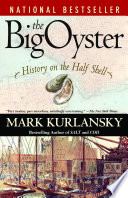
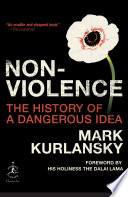
Other works by Mark Kurlansky
More books by this author — not yet covered in our podcast catalog.