Authors & Guests / Mark Hunt

Mark Hunt
Mark Hunt (born 23 March 1974) is a retired New Zealand professional mixed martial artist and kickboxer of Samoan descent. Competing in the heavyweight division, he rose to prominence in kickboxing as the winner of the K-1 World Grand Prix in Fukuoka in 2001, defeating notable opponents including Jérôme Le Banner and Francisco Filho en route to the tournament title. Hunt transitioned to mixed martial arts in 2004, initially competing in the Pride Fighting Championships where he faced elite competition, before joining the Ultimate Fighting Championship (UFC) in 2010. Nicknamed "The Super Samoan" for his explosive knockout power and resilience, he amassed a professional MMA record of 13 wins, 14 losses, 1 draw, and 1 no contest, highlighted by signature victories via knockout and earning multiple UFC "Fight of the Night" bonuses. His career included high-profile bouts against Brock Lesnar, Fabricio Werdum, and Stipe Miocic, though it was marred by a 2016 lawsuit against the UFC alleging concealment of Lesnar's performance-enhancing drug use prior to their bout, resulting in a no contest.
Mark Hunt was born on 23 March 1974 in South Auckland , New Zealand , to Samoan immigrant parents who followed strict Mormon principles amid a household dominated by violence . His father , Charles Hunt, inflicted routine physical abuse on Mark and his siblings, employing extreme methods such as beatings with belts, sticks, and electrical cords, often followed by forced cleaning with Dettol disinfectant, which Hunt later associated with trauma-induced aversion to the substance's odor. These punishments occurred nearly daily, enforcing a regime of fear and control that extended to psychological torment, including threats of abandonment or worse.
Compounding the physical violence, Charles sexually assaulted Hunt's sister Victoria repeatedly during Mark's early years, creating an environment of unchecked familial predation that permeated daily life. Local Mormon church authorities were informed of the abuses but failed to intervene, prioritizing institutional discretion over child protection . This systemic inaction allowed the dynamics of abuse to persist without external disruption.
The cumulative trauma manifested in Hunt's youth as heightened aggression, including bullying classmates and involvement in petty crimes such as theft and street fights, perpetuating a behavioral pattern traceable to the absence of corrective intervention in the home. These early tendencies reflected a direct causal link from endured violence to outward-directed hostility , unmitigated by family or community structures.
Mark Hunt, emerging from a youth plagued by street brawls and multiple prison terms in South Auckland , New Zealand , began kickboxing training in his late teens around the early 1990s as a deliberate shift toward structured discipline. Local gyms in Auckland provided the entry point, where Hunt channeled his raw aggression and physical prowess into formalized technique, viewing the sport as a causal mechanism to supplant aimless violence with purposeful skill acquisition.
His adaptation proved swift, leveraging innate knockout power in initial amateur bouts that demonstrated resilience and rapid learning under consistent training demands. A notable early milestone came mere days after commencing practice, when Hunt secured a first-round knockout victory in his debut match , earning a six-pack of beer as prize—a testament to his immediate competitive viability despite minimal preparation. By the mid-1990s, this foundation propelled him into professional kickboxing circuits, fostering sustained self-control through regimen-focused development rather than sporadic confrontations.
Books by Mark Hunt
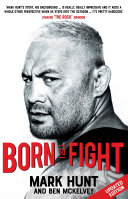
Other works by Mark Hunt
More books by this author — not yet covered in our podcast catalog.