Authors & Guests / Madeleine L’Engle

Madeleine L’Engle
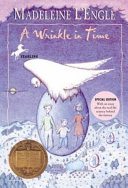
Madeleine L'Engle Camp Franklin (November 29, 1918 – September 6, 2007) was an American writer of young adult fiction, poetry, memoirs, and theological works, most renowned for her science fantasy novel A Wrinkle in Time (1962), which earned the John Newbery Medal in 1963. Over her six-decade career, she produced more than 60 books that integrated concepts from quantum physics and relativity with Christian spirituality , emphasizing themes of cosmic struggle between light and darkness , familial bonds, and individual moral agency .
L'Engle's breakthrough came after years of rejection; A Wrinkle in Time was turned down by 26 publishers before acceptance, reflecting her unconventional approach that defied prevailing norms in children's literature by challenging conformity and incorporating metaphysical inquiries. The novel's success propelled sequels like A Wind in the Door (1973) and spawned the Time Quintet series, while her Austin and O'Keefe family chronicles further explored ethical dilemmas amid scientific wonders. Her oeuvre extended to adult nonfiction, such as Walking on Water (1980), where she articulated a defense of artistic creation as a divine mandate, and she received additional honors including a second Newbery Honor for A Ring of Endless Light (1981).
A lifelong Episcopalian, L'Engle's integration of faith with speculative fiction provoked criticism from some conservative Christian groups, who alleged promotion of witchcraft or diluted orthodoxy despite her explicit scriptural allusions and rejection of such charges as misreadings of metaphorical storytelling. Personally, she married actor Hugh Franklin in 1946, raised two children, and later served as writer-in-residence at the Cathedral of St. John the Divine in New York, where she hosted workshops blending literature and theology until health issues curtailed her activities following a 1991 car accident. Her archives, preserved at Wheaton College and Smith College , underscore her enduring influence on readers grappling with the intersections of science , ethics, and transcendence.
Madeleine L'Engle Camp was born on November 29, 1918, in New York City as the only child of Charles Wadsworth Camp and Madeleine Hall Barnett Camp. Her father, born in 1879, worked as a writer, critic, and foreign correspondent after serving in World War I, while her mother, born in 1881 and a pianist, came from a prominent Jacksonville, Florida, family. The parents, married on December 27, 1906, were already in their late thirties at L'Engle's birth, creating a household marked by their artistic pursuits and social engagements rather than intensive daily involvement with their daughter. Living in an East Side apartment, L'Engle often ate meals alone in her room as her parents attended evening events, fostering early independence amid a creative but somewhat isolated environment.
The artistic inclinations of her parents directly shaped L'Engle's nascent interests; she wrote her first story at age five, began journaling at eight, and received a typewriter from her father at ten, mirroring his own profession and encouraging her professional writing ambitions. Her mother's musical background complemented this, with L'Engle receiving piano and art lessons from elementary school onward, embedding creativity as a core family value. As an only child , she developed a rich inner life through voracious reading—favorites included Emily of New Moon —which compensated for parental emotional distance and prefigured her literary focus on introspective, imaginative young characters.
A childhood poetry contest victory highlighted both her talent and familial support; when teachers doubted her authorship, her mother defended her by producing a stack of unpublished works, affirming L'Engle's abilities against skepticism.
Books by Madeleine L’Engle
Other works by Madeleine L’Engle
More books by this author — not yet covered in our podcast catalog.