Authors & Guests / Leo Tolstoy

Leo Tolstoy
Lev Nikolayevich Tolstoy (Russian: Лев Николаевич Толстой; 9 September 1828 – 20 November 1910) was a Russian count, army officer, and author whose realist novels War and Peace (1869) and Anna Karenina (1877–78) portray the psychological depths of human experience amid historical upheavals like the Napoleonic Wars and domestic social tensions in imperial Russia .
Born into nobility at the family estate of Yasnaya Polyana near Tula, Tolstoy drew from his aristocratic upbringing, military service in the Caucasus and Crimea, and observations of peasant life to craft narratives emphasizing moral complexity, fate, and individual agency over deterministic forces. His early works, including the autobiographical trilogy Childhood , Boyhood , and Youth (1850s), established his reputation for introspective prose, while later fiction like The Death of Ivan Ilyich (1886) probed themes of mortality and hypocrisy.
In mid-life, Tolstoy underwent a profound spiritual crisis , rejecting organized religion and state power in favor of a literalist interpretation of the Sermon on the Mount , which informed his advocacy for Christian anarchism , absolute pacifism , and voluntary simplicity—ideas articulated in essays such as The Kingdom of God Is Within You (1894). This shift led to practical actions, including famine relief efforts in Samara province and the redistribution of his Yasnaya Polyana lands to peasants, though it exacerbated family conflicts with his wife Sofia , who managed household finances and copy-edited his manuscripts amid his renunciation of copyrights.
The Russian Orthodox Church's Holy Synod excommunicated Tolstoy in 1901, declaring him a false teacher for denying core doctrines like the divinity of Christ and the church's authority, a decree he publicly contested as aligning with his critique of institutionalized faith over personal ethics. His philosophical writings influenced global non-violent movements, yet his uncompromising views on property, marriage, and violence alienated contemporaries, including tsarist authorities who censored his later output. Tolstoy died en route from Yasnaya Polyana after fleeing home in distress, leaving a legacy as both literary giant and radical moralist whose works continue to challenge readers on questions of conscience and society .
Lev Nikolayevich Tolstoy was born on September 9, 1828 (Old Style: August 28), at the family estate of Yasnaya Polyana in Tula Province, Russian Empire . He was the fourth of five children in an ancient aristocratic lineage on both sides: his paternal forebears included the Tolstoy counts, elevated to nobility in the 18th century and tracing origins to the 14th, while his maternal lineage descended from the princely Volkonsky family, a Rurikid house with roots in medieval Muscovy. The Yasnaya Polyana estate, spanning over 5,500 acres and inherited from his maternal grandfather Prince Nikolai Sergeyevich Volkonsky, served as the primary setting for Tolstoy's early years, embodying the landed gentry's self-sufficient agrarian life amid serf labor.
Tolstoy's father, Count Nikolai Ilyich Tolstoy (1794–1837), was a veteran lieutenant colonel of the Patriotic War of 1812 against Napoleon , known for his gentle demeanor and management of family estates despite financial strains from divided inheritance. His mother, Princess Maria Nikolaevna Volkonskaya (1790–1830), daughter of a decorated general, died from complications of childbirth on August 4, 1830, when Tolstoy was not yet two years old, leaving fragmented memories idealized in his later writings. Following her death, Tolstoy was primarily cared for by a wet nurse of French Huguenot descent and his paternal aunt , Aleksandra Ilyinichna, who supervised the household at Yasnaya Polyana .
Books by Leo Tolstoy
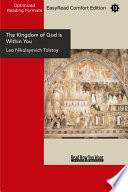
Other works by Leo Tolstoy
More books by this author — not yet covered in our podcast catalog.