Authors & Guests / Lee Smolin

Lee Smolin
Lee Smolin (born June 6, 1955) is an American theoretical physicist renowned for his foundational contributions to quantum gravity research, including co-developing loop quantum gravity and proposing cosmological natural selection . A founding and senior faculty member at the Perimeter Institute for Theoretical Physics since 2001, Smolin has also advanced ideas in the foundations of quantum mechanics , theoretical biology, and the philosophy of physics . His work emphasizes the reality of time and critiques prevailing paradigms in theoretical physics, influencing debates on the nature of the universe.
Smolin was born in New York City and educated at Hampshire College, where he earned a B.A. in 1975, followed by graduate studies at Harvard University, receiving an M.A. in 1978 and a Ph.D. in theoretical physics in 1979 under advisor Sidney Coleman. Early in his career, he held postdoctoral positions at the Institute for Advanced Study in Princeton, the Kavli Institute for Theoretical Physics in Santa Barbara, and the Enrico Fermi Institute at the University of Chicago. He later served as a professor at Yale University (1984–1994), Syracuse University (1994–1999), and Pennsylvania State University (1999–2001), where he helped establish the Center for Gravitational Physics and Geometry.
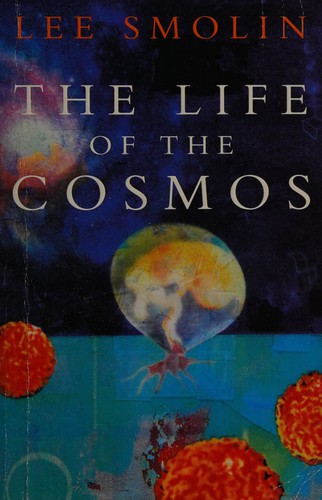
Throughout his career, Smolin has authored over 150 scientific papers and several influential books that bridge technical physics with broader philosophical inquiries. Notable publications include The Life of the Cosmos (1997), which introduced cosmological natural selection ; Three Roads to Quantum Gravity (2000), exploring approaches to unifying general relativity and quantum mechanics ; The Trouble with Physics (2006), a critique of string theory's dominance; Time Reborn (2013), arguing for time's fundamental role in physics; The Singular Universe and the Reality of Time (2015, co-authored with Roberto Mangabeira Unger ); and Einstein's Unfinished Revolution (2019), on the foundations of quantum mechanics . He is a Fellow of the American Physical Society and the Royal Society of Canada , and has received awards such as the 2009 Klopsteg Memorial Award, the inaugural Buchalter Cosmology Prize (2015, shared with Marina Cortês), and the NSERC Discovery Grant (2023–2028). As of 2025, Smolin holds an adjunct professorship at the University of Waterloo and is a faculty member in the University of Toronto's philosophy graduate program.
Lee Smolin was born on June 6, 1955, in New York City to Jewish parents Michael Smolin, an inventor and environmental process engineer, and Pauline Smolin, a playwright .
He spent his early childhood on Manhattan's Upper West Side until age nine, when his family relocated to Cincinnati , Ohio . There, Smolin's fascination with science emerged, sparked by his father's readings of Albert Einstein's work on relativity when he was about 10 or 11 years old; he also became intrigued by concepts of time and space, as well as Buckminster Fuller's designs for geodesic domes, which introduced him to differential geometry . At 17, Einstein's autobiographical notes further inspired him to commit to theoretical physics as a career.
Finding traditional high school unengaging, Smolin dropped out of Walnut Hills High School in Cincinnati but accelerated his studies in calculus with guidance from a family friend, a mathematics professor , and enrolled in college-level courses. He then entered Hampshire College , known for its innovative, student-driven curriculum, where he earned a B.A. in physics and philosophy in June 1975 under the advisement of physicist Herbert Bernstein ; the program's emphasis on quantum mechanics before classical physics shaped his early approach to the subject.
Smolin continued his training at Harvard University , obtaining an A.M. in March 1978 and a Ph.D. in theoretical physics in June 1979, with advisors Sidney Coleman and Stanley Deser.
Books by Lee Smolin
Other works by Lee Smolin
More books by this author — not yet covered in our podcast catalog.