Authors & Guests / Lawrence Schiller
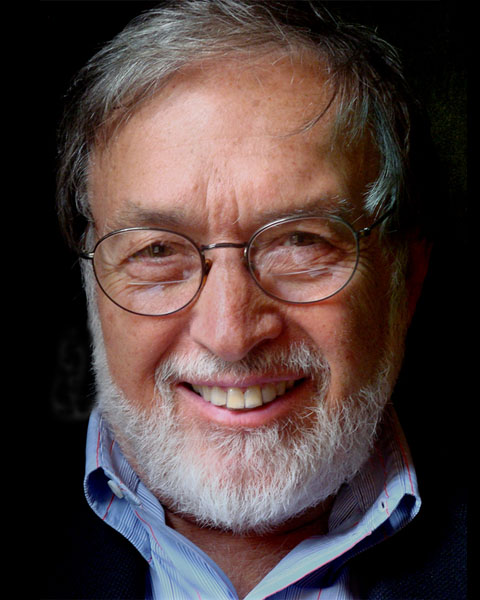
Lawrence Schiller
Lawrence Julian Schiller (born December 28, 1936) is an American photojournalist, filmmaker, author, and publisher whose multifaceted career has documented pivotal cultural, political, and criminal events through iconic photographs, collaborative books, and produced films.
Schiller's photography breakthrough came early, with images published in magazines such as Life , Sports Illustrated , and Playboy while he attended Pepperdine College; his notable captures include Marilyn Monroe's final public photo session in 1962 , Muhammad Ali in the boxing ring , and the assassination of Robert F. Kennedy in 1968. Over nearly four decades, he collaborated extensively with author Norman Mailer on projects like the Pulitzer Prize-winning The Executioner's Song (1979) and Marilyn: A Biography (1973), blending visual documentation with narrative journalism .
Transitioning to film and true crime , Schiller directed and produced Emmy-winning works including The Executioner's Song (1982), adapted from Mailer's book, and Peter the Great (1986); he also authored bestselling investigative books such as American Tragedy (1996) on the O.J. Simpson case and Perfect Murder, Perfect Town (1999) on the JonBenét Ramsey murder, though his methods in securing exclusive access, including hidden recordings like that of Jack Ruby in 1967, have drawn ethical scrutiny for prioritizing sensationalism over detachment. His contributions earned an Academy Award for editorial direction on The Man Who Skied Down Everest (1975) and multiple Emmys, underscoring his role in shaping public understanding of landmark stories despite debates over his "ambulance-chasing" approach to high-profile tragedies.
Lawrence Schiller was born on December 28, 1936, in Brooklyn , New York, to Isidore Schiller, a merchant, and Jean Schiller (née Liebowitz), a department store buyer. The family lived at 10 Argyle Street in Brooklyn until 1943, when they relocated to the San Diego area in California .
During his childhood, Schiller experienced an accident—struck in the eye by an umbrella—that resulted in permanently impaired vision in one eye. Despite this limitation, he began pursuing photography in junior high school after receiving his first camera, developing an intense, self-directed obsession with the medium that relied on persistent practice rather than specialized equipment or instruction.
Attending La Jolla High School , Schiller honed his skills through trial and error, winning five national Graflex Photographic Awards during his teenage years, with the first recognized at age 15. These early accomplishments stemmed from his independent experimentation in a modest family environment, free from advantages like professional mentorship or elite resources.
Schiller attended Pepperdine College in Los Angeles , earning a B.A. there. While a student, he actively pursued photography , with his images appearing in prominent magazines including Life , Sport , Playboy , Glamour , and The Saturday Evening Post . These early publications stemmed from his freelance submissions, demonstrating entry into the field through direct sales of work rather than formal institutional networks or elite affiliations.
Following his time at Pepperdine, around 1957, Schiller transitioned to full-time freelance photojournalism, initially contributing to Life magazine and The Saturday Evening Post . By the late 1950s, his portfolio expanded to include assignments for outlets such as Look and Newsweek , building on practical experience gained from competitive image sales during college. This merit-driven progression highlighted his self-taught proficiency in capturing campus and local subjects, which evolved into broader professional opportunities without reliance on privileged introductions.