Authors & Guests / Klaus Schwab

Klaus Schwab
Klaus Martin Schwab (born 30 March 1938) is a German engineer and economist who founded and served as Executive Chairman of the World Economic Forum (WEF), an international organization that convenes global leaders to address economic, social, and geopolitical issues through public-private partnerships. Born in Ravensburg, Germany, Schwab earned a doctorate in engineering from the Swiss Federal Institute of Technology (ETH Zurich) and a doctorate in economics from the University of Fribourg, followed by a Master of Public Administration from Harvard University's Kennedy School of Government. In 1971, as a professor of business policy at the University of Geneva, he established the European Management Symposium, later renamed the European Management Forum and then the WEF in 1987, which has grown into a platform hosting annual summits in Davos, Switzerland, attended by thousands of influencers from various sectors. Schwab has authored books promoting "stakeholder capitalism," which advocates for businesses to prioritize broader societal impacts beyond shareholders, and "The Fourth Industrial Revolution," highlighting the fusion of technologies blurring physical, digital, and biological spheres. His leadership has earned awards including Japan's Order of the Rising Sun and the Reinhard Mohn Prize, recognizing contributions to global cooperation, though the WEF's initiatives—such as the 2020 Great Reset proposal for post-pandemic economic reconfiguration—have faced scrutiny for potentially enabling undue elite influence on sovereign policies and favoring supranational agendas over democratic accountability.
Klaus Martin Schwab was born on March 30, 1938, in Ravensburg, Germany, to Eugen Wilhelm Schwab and Erika Epprecht. His father, born in 1899 in Karlsruhe, Germany, directed the Ravensburg operations of Escher Wyss, a Swiss engineering company whose German subsidiary manufactured turbines and other equipment supplied to the Nazi regime for military applications, including propulsion systems for U-boats and potentially other strategic projects during World War II. While some accounts allege deeper personal involvement by Eugen Schwab in Nazi activities, such as party membership or direct collaboration with Adolf Hitler, these claims lack substantiation and have been characterized as exaggerated or disinformation by multiple fact-checking organizations.
Erika Epprecht, Schwab's mother, was of Swiss origin, establishing early familial connections to Switzerland that later influenced his career trajectory. Schwab spent his early years in Ravensburg amid the escalating conflict of World War II, experiencing bombing raids, rationing, and postwar reconstruction, events he has described as profoundly shaping his worldview toward fostering postwar European reconciliation between former adversaries like France and Germany. The family's industrial ties and Swiss heritage provided relative stability, though the region's proximity to strategic sites exposed them to wartime disruptions, including Allied air campaigns targeting industrial facilities.
Schwab studied mechanical engineering at the Swiss Federal Institute of Technology (ETH Zurich), completing his undergraduate degree in 1962 and earning a doctorate (Dr. Sc. Tech.) in 1966. He concurrently pursued economics at the University of Fribourg, obtaining a doctorate (Dr. rer. pol.) in 1967 with summa cum laude honors. These dual qualifications in engineering and economics equipped him with a technical and analytical foundation, emphasizing interdisciplinary approaches to industrial and economic challenges prevalent in post-World War II Europe.
Schwab later obtained a Master of Public Administration (MPA) from Harvard University's John F. Kennedy School of Government, where he encountered influential figures shaping his perspectives on global management and policy.
Episodes
Books by Klaus Schwab
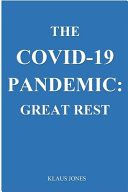
Other works by Klaus Schwab
More books by this author — not yet covered in our podcast catalog.