Authors & Guests / John Safran

John Safran
John Safran (born 1972) is a Melbourne-based Australian writer, filmmaker, and journalist renowned for his immersive, gonzo-style investigations that combine humor with examinations of religion, race, extremism, and true crime. His breakthrough documentaries, including John Safran vs. God (2004) and Music Jamboree (2002), each won Australian Academy of Cinema and Television Arts awards for best comedy series, establishing his reputation for provocative, original content. Safran's books, such as Murder in Mississippi (2013), which earned the Ned Kelly Award for Best True Crime, and Puff Piece (2021), shortlisted for the Prime Minister's Literary Awards, exemplify his approach of inserting himself into contentious narratives to uncover underlying truths. Recent works like Squat (2024), detailing his unauthorized stay in abandoned properties linked to controversial figures, continue his tradition of boundary-pushing journalism amid debates over ethics and access in reporting on cultural and political extremes.
John Safran was born in Melbourne , Australia , to Jewish parents whose family histories were shaped by the Holocaust and displacement. His mother, Gitl, was born in Uzbekistan in 1942 while her parents fled Poland to escape the advancing Nazi forces during World War II ; her family had been religiously observant prior to the war, with only her grandparents surviving the genocide .
Safran's upbringing occurred in Melbourne's Jewish community, where his family identified culturally as Jewish but practiced minimally. He attended an ultra-orthodox Jewish high school, an environment that contrasted with his household's secular leanings and exposed him to strict religious observance during his formative years.
Safran completed his secondary education at Yeshivah College, an Orthodox Jewish high school in St Kilda, Melbourne , where he has described himself as the least religious student in one of the city's most religiously observant institutions. During his final year ( Year 12 ) at the school, he formed the hip-hop group Raspberry Cordial alongside friend Chris Lumsden, reflecting an early creative engagement with music and performance.
Following high school, Safran enrolled in the journalism program at RMIT University in Melbourne . He discontinued his studies shortly thereafter, opting instead for employment at an advertising agency , which marked an initial pivot toward media-related work.
Safran's pre-university interests centered on songwriting and music production; at age 15, he misrepresented his age to participate in a songwriting workshop at Melbourne's College of Adult Education , demonstrating an early determination to pursue creative outlets beyond formal schooling. These pursuits, including the formation of his high school hip-hop ensemble, foreshadowed his later satirical and documentary-style media endeavors, though they remained extracurricular during his education.
Safran's entry into television came in 1997 with his participation as one of eight contestants in the Australian Broadcasting Corporation's Race Around the World , a reality competition format adapted from a Canadian series. The program required participants to travel globally for 100 days, equipped only with digital video cameras, to produce ten four-minute mini-documentaries each, with the winner receiving a $10,000 prize and production support for a larger project. Safran did not win but gained prominence for his gonzo-style segments, including an audition tape featuring him drinking urine to demonstrate commitment and a fourth episode in Ivory Coast where he commissioned voodoo priests to hex his ex-girlfriend, highlighting his willingness to inject personal absurdity into journalism. These elements established his signature blend of provocation, humor, and self-deprecation , marking the series as his professional breakthrough despite finishing far from first place.
Books by John Safran
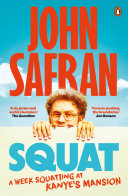
Other works by John Safran
More books by this author — not yet covered in our podcast catalog.