Authors & Guests / John C Lilly

John C Lilly
John Cunningham Lilly (January 6, 1915 – September 30, 2001) was an American physician, neurophysiologist, and researcher renowned for developing the isolation tank to study sensory deprivation and for conducting pioneering, though inconclusive, experiments on dolphin vocalization and interspecies communication. His work at the National Institute of Mental Health (NIMH) in the 1950s led to his invention of the first flotation tank in 1954, a device consisting of an enclosed saline bath intended to minimize external stimuli and facilitate introspection of internal mental processes. Lilly's dolphin studies, initiated in the late 1950s, involved analyzing bottlenose dolphin sonar emissions and attempting to establish linguistic exchanges, establishing research facilities in the U.S. Virgin Islands and later California to explore potential nonhuman intelligence. These efforts yielded insights into cetacean acoustic capabilities but failed to demonstrate bidirectional human-dolphin dialogue, amid reports of methodological challenges and ethical concerns such as psychedelic administration to subjects.
In later decades, Lilly's investigations shifted toward psychedelics and altered states , incorporating substances like LSD and ketamine into personal and experimental protocols, which he chronicled in books detailing subjective experiences of consciousness expansion. This trajectory culminated in metaphysical formulations, including the concept of the Earth Coincidence Control Office (ECCO) , posited as a cosmic regulatory entity orchestrating human events through orchestrated synchronicities—a framework derived from his immersion in isolation tanks and psychotropic self-experimentation rather than empirical validation. Despite the fringe nature of these pursuits, Lilly's foundational contributions to sensory isolation techniques influenced subsequent therapeutic applications, while his dolphin research spurred broader scientific interest in marine mammal cognition , underscoring the tension between innovative inquiry and verifiable outcomes.
John Cunningham Lilly was born on January 6, 1915, in Saint Paul, Minnesota , into a prominent and affluent family headed by his father, Richard C. Lilly, who served as president of the First National Bank of St. Paul. The household emphasized discipline alongside an encouragement of intellectual pursuits, providing Lilly with resources to explore scientific endeavors from a young age. Raised in a Catholic environment, he demonstrated precocious interest in empirical investigation, conducting basic chemical experiments by age 13, though one such trial accidentally injured a friend.
The early death of his brother, who perished after falling from a horse, served as a pivotal trauma around Lilly's adolescence, instilling a resolute commitment to medicine as a tool for conquering disease and averting untimely losses through methodical, evidence-based inquiry. Complementing this drive, childhood activities such as observing insects , digging for fossils, and engaging with natural environments sparked an initial fascination with animal behaviors and the boundaries between human and non-human cognition , laying groundwork for later explorations without romanticizing innate predispositions. These experiences underscored a causal orientation toward biology and physiology , prioritizing observable mechanisms over abstract speculation to address real-world afflictions.
Lilly earned bachelor's degrees in physics and biology from the California Institute of Technology in 1938. He subsequently studied medicine, receiving his Doctor of Medicine degree from the University of Pennsylvania in 1942. During this period, his academic focus shifted toward integrating physical sciences with biological systems, laying groundwork for later neurophysiological inquiries.
Books by John C Lilly
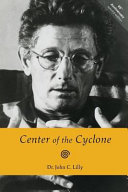
Other works by John C Lilly
More books by this author — not yet covered in our podcast catalog.