Authors & Guests / Jerry Capeci
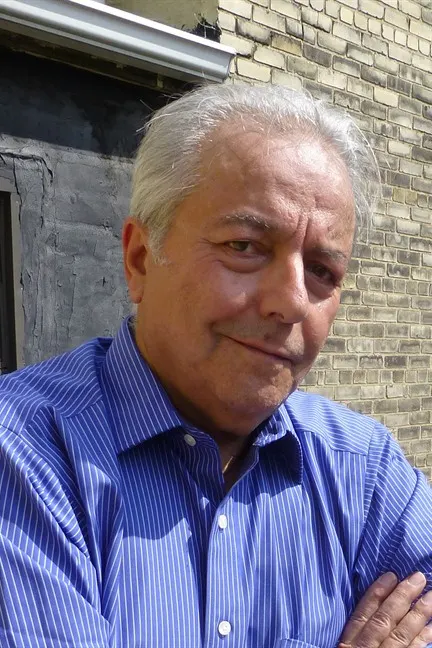
Jerry Capeci
Jerry Capeci (born June 30, 1944) is an American journalist, author, and organized crime expert renowned for his decades-long coverage of the Mafia , particularly the Five Families of New York City .
Born and raised in Bensonhurst, Brooklyn , Capeci began his journalism career covering the crime beat for the New York Daily News and the New York Post , where he reported on organized crime for over 20 years. He gained early prominence as the only newspaperman to attend the 1976 funeral of Gambino crime family boss Carlo Gambino , marking his deep immersion in the world of New York mob activities.
In 1989, Capeci launched his influential "Gang Land" column at the New York Daily News , which ran until 1995 and became a staple for insights into Mafia operations; he transitioned it to an online format in 1996 via ganglandnews.com, where it continues to provide weekly exclusives on organized crime as of 2025. The column later appeared in The New York Sun from 2002 to 2008, earning him numerous journalism awards for his investigative work.
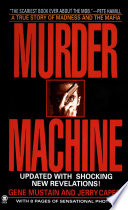
Capeci has authored or co-authored seven books on the Mafia , including Mob Star: The Story of John Gotti (1988, updated 2002), a definitive account based on 17 years of reporting; Murder Machine: The Story of Roy DeMeo's Mafia Crew (1992); Mob Boss: The Life of Little Al D'Arco, the Man Who Brought Down the Mafia (2013); and The Complete Idiot's Guide to the Mafia (2002, second edition 2005). His writing has been praised for blending firsthand reporting with historical analysis, establishing him as one of the world's leading authorities on organized crime .
A frequent media commentator, Capeci appears as an expert on network and cable television programs, offering analysis on contemporary mob issues, such as the Mafia's involvement in gambling scandals and internal power shifts, including the 2024 "shelving" of former Philadelphia boss Joey Merlino and ongoing federal cases in 2025. Now based in Manhattan after over 40 years in the field, he remains a pivotal voice in chronicling the evolution of American organized crime .
Gerald Capeci, born Gerald Capeci on June 30, 1944, in Brooklyn , New York, was raised in the Bensonhurst neighborhood. Pronounced ka-PEH-chee, his surname reflects Italian-American roots common in the area.
Bensonhurst, a working-class enclave in southwestern Brooklyn , was predominantly Italian-American during Capeci's youth and known for its strong cultural ties to organized crime , including associations with the Gambino crime family . Figures like Carlo Gambino , the family's longtime boss, resided in the neighborhood, and social clubs there served as hubs for Mafia activities. This environment, blending everyday community life with visible underworld elements, ignited Capeci's early fascination with gangsters, despite his family having no direct involvement in mob affairs.
As a child, Capeci observed local mob activities firsthand, such as loan sharks operating from bowling alleys and individuals running illicit card games, which he later described as formative: "For me, the Mafia was the loan shark who hung out at the bowling alley , the guy who loaned you $96 for $120 and you paid him in eight weeks. The guy who ran card games. You knew they were connected. You knew who they were." He engaged in typical Bensonhurst youth pastimes, including playing cards, shooting craps , and frequenting pool halls and bowling alleys , all amid this pervasive yet distant criminal undercurrent. His education took place in local Brooklyn schools, culminating in high school graduation, after which the neighborhood's blue-collar ethos influenced his initial forays into manual labor.
Jerry Capeci was raised in a working-class Italian-American family in New York City . His father worked as a cabdriver, while his mother held a series of jobs, reflecting the modest circumstances typical of many families in their community.