Authors & Guests / J.D. Salinger

J.D. Salinger
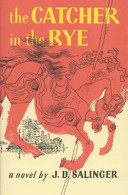
Jerome David Salinger (January 1, 1919 – January 27, 2010) was an American author best known for his 1951 novel The Catcher in the Rye , which depicts the disillusionment of adolescent protagonist Holden Caulfield and achieved widespread acclaim for its candid portrayal of teenage alienation. Born in New York City to Sol Salinger, a kosher cheese importer of Lithuanian Jewish descent, and Miriam Jillich, of Irish Catholic background, he attended military school and briefly college before serving in the U.S. Army during World War II , experiences that informed his early short stories published in magazines like The New Yorker . After The Catcher in the Rye 's success, Salinger retreated from public view, settling in Cornish, New Hampshire , where he lived in seclusion for over five decades, producing limited additional works such as the short story collection Nine Stories (1953) and Raise High the Roof Beam, Carpenters and Seymour: An Introduction (1963), while embracing Vedanta philosophy and rejecting biographical intrusions through litigation. His deliberate obscurity fueled speculation and unauthorized accounts, underscoring a career marked by early literary prominence followed by self-imposed isolation amid persistent cultural reverence for his oeuvre.
Jerome David Salinger was born on January 1, 1919, in New York City as the second child of Sol Salinger, a Jewish immigrant from Sudargau, Lithuania , who worked as an importer of kosher cheese and European luxury foodstuffs including ham and meats, and Miriam Jillich Salinger, originally Marie Jillich from County Cork , Ireland by descent but born in Iowa to Scotch-Irish parents, who changed her name to Miriam upon marriage and presented herself as Jewish without formal conversion. The family's success in Sol's business placed them in the upper-middle class, initially residing on Manhattan's West Side before relocating to 1133 Park Avenue in 1932 when Salinger was thirteen years old.
Salinger had one sibling, an older sister named Doris, born in 1911, who later worked as a fashion buyer at Bloomingdale's . During his early childhood , he attended public schools in Manhattan , growing up in a household where his mother's true heritage remained undisclosed to him until adulthood, contributing to his later ambivalence toward organized Judaism . The family's Park Avenue apartment reflected their affluent status amid the backdrop of interwar New York, though Salinger's personal experiences included typical urban boyhood pursuits and early signs of introspection that would mark his literary career.
Jerome David Salinger attended public schools in Manhattan during his elementary years before his parents enrolled him in the private McBurney School for ninth and tenth grades starting in 1932. At McBurney , Salinger showed early signs of literary engagement by contributing short stories to the school's magazine, though his academic performance remained below average overall.
In 1934, at age 15, Salinger transferred to Valley Forge Military Academy in Wayne, Pennsylvania , for his junior and senior years, graduating in June 1936. The academy's disciplined environment, later echoed in fictional settings like Pencey Prep in his novel The Catcher in the Rye , marked a period of personal challenge, including initial disinterest in military routine but eventual adaptation.
Following graduation, Salinger briefly attended New York University and Ursinus College in Pennsylvania but withdrew from both without completing coursework, pursuing instead transient interests in acting and travel. In 1939, he enrolled in the Columbia University School of General Studies and took a creative writing course taught by Whit Burnett, editor of Story magazine. This class proved pivotal, as Burnett recognized Salinger's potential and published his first story, "The Young Folks," in Story later that year, formalizing Salinger's commitment to fiction amid rejections from other outlets.
Books by J.D. Salinger
Other works by J.D. Salinger
More books by this author — not yet covered in our podcast catalog.