Authors & Guests / Jack Weatherford

Jack Weatherford
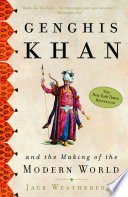
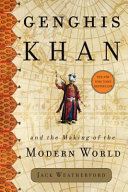
Jack McIver Weatherford is an American cultural anthropologist and author specializing in tribal and nomadic societies. He earned a B.A. in political science from the University of South Carolina in 1967, an M.A. in sociology in 1972, an M.A. in cultural anthropology from the University of North Carolina at Chapel Hill in 1973, and a Ph.D. in anthropology from UNC in 1977. Weatherford taught anthropology at Macalester College starting in 1983, where he held the DeWitt Wallace Chair until becoming professor emeritus. His fieldwork spans Bolivia , Yucatán , Native American communities in the United States, and Mongolia , focusing on economic development , women's roles, and cultural dynamics in tribal contexts. Weatherford gained prominence with his 2004 book Genghis Khan and the Making of the Modern World , a New York Times bestseller that attributes to the Mongol Empire advancements in free trade , religious tolerance , merit-based governance , and idea exchange, countering prevailing views of the conquests as mere destruction. The work, drawing on his extensive Mongolian research, posits that these influences extended to European Renaissance developments and global modernization. He is the only foreigner inducted into Mongolia's National Academy of Sciences and divides his time between Minnesota and Ulaanbaatar . Weatherford has authored nine books, including examinations of Native American contributions to Western society , emphasizing empirical reassessments of marginalized historical actors over ideological narratives.
Jack McIver Weatherford was born in 1946 in Dovesville, South Carolina , and spent his early years on a family farm growing crops such as corn. This rural Southern environment exposed him to agricultural practices rooted in Native American innovations, though Weatherford later recounted his childhood unawareness of these origins, which contrasted with his eventual scholarly focus on indigenous contributions to global civilization. The demands of farm life and proximity to traditional community structures in post-World War II South Carolina provided foundational experiences in self-reliance and social organization , themes echoed in his anthropological examinations of nomadic and agrarian societies.
Jack Weatherford earned his B.A. in political science from the University of South Carolina in 1967. He subsequently obtained an M.A. in sociology from the same institution in 1972. These early degrees reflected an initial orientation toward social sciences, with political science providing a foundation in governance and institutions, while sociology introduced broader societal structures and dynamics.
Transitioning to anthropology, Weatherford pursued an M.A. in the field from the University of California, San Diego , in 1973, followed by a Ph.D. in anthropology from UCSD in 1977. He completed post-doctoral work at Duke University's Institute of Policy Sciences. This advanced training emphasized cultural anthropology , equipping him with ethnographic methods for studying non-Western societies.
Weatherford's initial academic interests centered on the historical and contemporary roles of tribal peoples in shaping global developments, including fieldwork with indigenous groups in Bolivia and the Amazon basin. This focus extended to examining the overlooked contributions of Native American societies to broader human progress, such as agricultural innovations and social organizations, which he later explored in depth through anthropological analysis rather than conventional historical narratives. His early work highlighted causal influences from tribal structures on modern institutions, prioritizing empirical observation of living communities over archival records alone.
Jack Weatherford joined Macalester College in 1983 as a professor in the anthropology department, specializing in cultural anthropology .
Books by Jack Weatherford
Other works by Jack Weatherford
More books by this author — not yet covered in our podcast catalog.