Authors & Guests / Jack Herer

Jack Herer
Jack Herer (June 18, 1939 – April 15, 2010) was an American cannabis activist and author who championed the industrial, medicinal, and economic potential of hemp and marijuana while critiquing their prohibition as driven by competitive industry interests rather than public health concerns. Born in New York City as the youngest of three children, Herer served in the U.S. Army as a military police officer during the Korean War era before entering the counterculture scene, opening his first head shop in 1973, and immersing himself in cannabis-related advocacy.
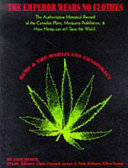
Herer's most influential work, The Emperor Wears No Clothes (first published in 1985 and revised through multiple editions), compiled historical patents, agricultural data, and economic analyses to argue that cannabis prohibition originated in the early 20th century to protect sectors like timber, cotton , and petrochemicals from hemp's superior versatility as a renewable resource for paper , textiles, fuel , and food . The book, which Herer self-published and distributed at hemp festivals and activist events, became a cornerstone text for the cannabis legalization movement, emphasizing empirical evidence of hemp's historical dominance in American farming—such as George Washington's cultivation of it—and its suppression via laws like the 1937 Marihuana Tax Act. Over three decades, Herer lectured globally, operated advocacy booths at events like the Great Midwest Marijuana Harvest Festival, and collaborated with figures in the push for policy reform, earning the moniker "Emperor of Hemp" for his relentless promotion of cannabis as a solution to environmental degradation and resource scarcity. He died in Eugene, Oregon , from complications following a heart attack, leaving a legacy that continues to inform debates on cannabis's re-legalization amid growing empirical validation of its non-toxic profile and multifaceted utility.
Jack Herer was born on June 18, 1939, in Brooklyn , New York City , to Polish Jewish immigrant parents who held conservative values. His father worked as a bill collector, providing a modest family income amid the immigrant experience in urban America. As the youngest of three children, Herer grew up in a household emphasizing traditional Jewish customs and socioeconomic stability, which instilled in him an initial worldview aligned with conservative principles such as self-reliance and opposition to social experimentation.
The family relocated from New York City to Buffalo, New York , during Herer's early childhood, where he spent his formative years in a working-class environment that reinforced conventional norms. This upbringing as a "normal Jewish kid" in a conservative immigrant family shaped his early interests toward structured pursuits, including eventual enlistment in the military after leaving school, reflecting a preference for discipline over countercultural influences prevalent in the era. Herer's childhood remained relatively unremarkable until personal losses, such as his father's death, disrupted the family dynamic and prompted reflections on stability later in life.
Jack Herer enlisted in the United States Army in 1956 at the age of 17, shortly after dropping out of high school in Buffalo, New York. He served as a military police officer, with his posting in Korea during the post-Korean War era, and completed a three-year term before receiving an honorable discharge. This service instilled a sense of discipline reflective of his early conservative outlook, with no recorded involvement in disciplinary issues or deviations from military protocol.
Following his discharge around 1959, Herer transitioned to civilian employment focused on economic stability, beginning with manual labor such as painting. In the early 1960s, he relocated to Los Angeles with his wife and three sons to take a position with a neon sign company, engaging in sales and production work that demanded practical skills and reliability.
Books by Jack Herer
Other works by Jack Herer
More books by this author — not yet covered in our podcast catalog.