Authors & Guests / Harvey Pekar

Harvey Pekar
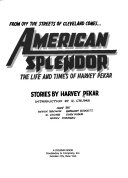
Harvey Lawrence Pekar (October 8, 1939 – July 12, 2010) was an American underground comic book writer, music critic, and longtime file clerk best known for his autobiographical series American Splendor , which depicted the unfiltered, everyday struggles and banalities of working-class life in Cleveland , Ohio . Born to Polish Jewish immigrant parents in Cleveland, Pekar worked for over 35 years as a file clerk at a Veterans Administration hospital while self-publishing American Splendor starting in 1976, collaborating with artists such as Robert Crumb to illustrate his scripts drawn from personal experiences, hypochondria, and cultural observations. The series rejected superhero tropes in favor of gritty realism, earning a cult following and critical acclaim; a 1986 anthology collection won the American Book Award, broadening its reach beyond underground comics . Pekar's media appearances, including multiple spots on Late Night with David Letterman where his argumentative style led to a 1986 on-air confrontation, highlighted his curmudgeonly persona and disdain for superficial entertainment. A 2003 film adaptation of American Splendor , featuring Paul Giamatti as Pekar and including his own cameo, introduced his work to mainstream audiences and received widespread praise for capturing his authentic voice. Despite health battles with prostate cancer and other ailments, Pekar continued producing comics until his death from cancer complications, leaving a legacy of elevating ordinary existence into literary art through unflinching honesty.
Harvey Lawrence Pekar was born on October 8, 1939, in Cleveland , Ohio , to Saul and Dora Pekar, Jewish immigrants from Białystok, Poland . His father, a Talmudic scholar, owned a small grocery store on Kinsman Avenue in the city's Fairfax neighborhood, a predominantly Jewish area, where the family lived in an apartment above the business. Pekar had a younger brother, Allen.
The Pekars spoke Yiddish at home and maintained strong ties to Eastern European Jewish traditions amid the working-class environment of mid-20th-century Cleveland . The family's modest circumstances reflected broader economic pressures on immigrant-owned small businesses during the post-World War II era, including competition and the 1950s recession that strained local commerce. These early experiences in a tight-knit but resource-limited household contributed to Pekar's lifelong preoccupation with the banalities and frustrations of everyday existence.
Pekar graduated from Shaker Heights High School in Cleveland in 1957. Following graduation, he enlisted in the United States Navy, serving briefly before his discharge. He then enrolled at Case Western Reserve University to study history but dropped out after one year.
Entering adulthood amid the 1958 recession, Pekar faced challenges securing steady work and held a series of menial positions, including as a postal clerk. These early experiences underscored his detachment from conventional career paths, fostering an autodidactic approach to intellectual pursuits outside formal structures.
During this time, Pekar developed intense interests in jazz and literature as counterpoints to routine labor, becoming an avid record collector focused on jazz discs. He engaged deeply with Beat Generation writers such as Jack Kerouac , whose works influenced his later explorations of everyday realism. These self-guided studies laid the groundwork for his critical writing, emphasizing personal discovery over institutional validation.
Harvey Pekar secured employment as a file clerk at the Cleveland Veterans Administration Hospital in 1966, following a series of odd jobs after his Navy service and brief college attendance. In this role within the hospital's records management department, he handled filing and administrative tasks amid the predictable routines of federal bureaucracy , a position he maintained without seeking promotions to preserve its stability.
Books by Harvey Pekar

Other works by Harvey Pekar
More books by this author — not yet covered in our podcast catalog.