Authors & Guests / Guy Lawson
Guy Lawson
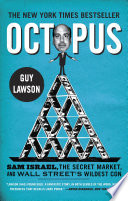
Guy Lawson is a Toronto-born investigative journalist and New York Times bestselling author specializing in exposés of crime , financial fraud , and institutional corruption . His career highlights include the 2011 Rolling Stone article "Arms and the Dudes," which detailed how two young entrepreneurs secured Pentagon contracts for arms dealing during the Iraq War , leading to his book War Dogs and its adaptation into the 2016 feature film War Dogs directed by Todd Phillips . Other notable books encompass Octopus: Sam Israel, the Secret Market, and Wall Street's Wildest Con , which chronicles a hedge fund manager's elaborate Bay Street-inspired scheme involving faked deaths and rigged markets, and Hot Dog Money , an examination of bribery and money-laundering in NCAA college football booster networks. Lawson's contributions have appeared in outlets including GQ , Harper's , and the New York Times Magazine , often relying on primary sources and on-the-ground reporting to reveal causal mechanisms behind scandals, such as regulatory loopholes enabling illicit arms trades or sports-related graft. While his work, including War Dogs , has prompted defamation suits alleging misrepresentation—such as one from an Albanian businessman claiming involvement in corrupt deals—U.S. courts have upheld its factual basis under First Amendment protections, affirming the journalistic value of probing elite malfeasance.
Guy Lawson was born on June 14, 1963, in Toronto, Ontario, Canada. His parents were expatriates originally from Australia and New Zealand, which contributed to a household influenced by international perspectives.
Lawson spent much of his early childhood in Saskatchewan, where his family relocated during the 1970s. His father, Bruce Lawson, held a senior position as a top aide to Saskatchewan Premier Allan Blakeney, a New Democratic Party leader who governed the province from 1971 to 1982. This proximity to provincial politics offered Lawson firsthand observations of governmental processes, policy formulation, and the interplay between bureaucracy and leadership, elements that later informed his skeptical approach to power structures.
The geographic and cultural setting of Saskatchewan during this period exposed Lawson to the stark contrasts between Canadian prairie life and the adjacent United States , a border proximity that evoked both familiarity and separation. His father's pronounced anti-American sentiments, rooted in ideological differences, further accentuated these divides, cultivating in Lawson an early awareness of national identities, economic disparities, and cross-border influences that would underpin his comparative analyses of North American societies.
Guy Lawson was born in Toronto , Ontario , to expatriate parents originally from Australia and New Zealand . His father, Bruce Lawson, worked as a journalist and political speechwriter who served as a top aide to Saskatchewan New Democratic Party Premier Allan Blakeney during the 1970s. Following his parents' divorce, Lawson lived primarily with his mother into his teenage years, while the family's relocation aligned with his father's professional commitments in Saskatchewan politics.
Lawson spent his formative years in Regina, Saskatchewan , amid the province's prairie environment and resource-driven economy, including potash mining and agriculture that underscored rural-urban tensions. The Blakeney administration's 1975 nationalization of the potash industry exemplified Saskatchewan's socialist-leaning policies, exposing young Lawson to debates over state intervention in global markets and critiques of unchecked capitalism . He attended Sheldon Williams Collegiate, a public high school in Regina, during this period.
His father's pronounced anti-American views, rooted in expatriate perspectives and political ideology, permeated Lawson's childhood, instilling early skepticism toward U.S.
Books by Guy Lawson
Other works by Guy Lawson
More books by this author — not yet covered in our podcast catalog.