Authors & Guests / Greg Lukianoff

Greg Lukianoff
Greg Lukianoff (born 1978) is an American attorney and free speech advocate serving as president and chief executive officer of the Foundation for Individual Rights and Expression (FIRE), a nonprofit organization dedicated to defending First Amendment rights, particularly on college campuses.
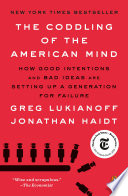
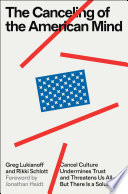
Lukianoff has authored several books critiquing trends in higher education that he argues undermine intellectual freedom and resilience, including Unlearning Liberty: Campus Censorship and the End of American Debate (2012), which documents free speech violations faced by students, and Freedom from Speech ( 2014 ), which challenges common justifications for restricting expression. In collaboration with social psychologist Jonathan Haidt , he co-authored the New York Times bestseller The Coddling of the American Mind: How Good Intentions and Bad Ideas Are Setting Up a Generation for Failure (2018), positing that protective parenting, administrative overreach, and cognitive distortions have contributed to rising anxiety and fragility among young people, evidenced by data on mental health declines and disinvitation attempts of speakers on campuses . Their follow-up, The Canceling of the American Mind (2023), extends this analysis to broader societal cancel culture phenomena, drawing on FIRE's case database showing over 1,000 documented incidents of attempted censorship since 2000.
Under Lukianoff's leadership since 2001, FIRE has achieved notable successes in litigation and advocacy, such as securing policy changes at over 400 institutions to protect expressive rights and winning landmark cases like the 2012 Supreme Court victory in McCullen v. Coakley against buffer zones around abortion clinics, which expanded public forum protections. He received the Playboy Foundation's Freedom of Expression Award in 2008 as its inaugural honoree and, in 2024, became the first recipient of an award recognizing sustained contributions to campus free speech. While praised by civil libertarians for empirical documentation of speech suppression, Lukianoff's work has drawn criticism from academics and media outlets for allegedly exaggerating threats to justify opposition to equity initiatives, though FIRE's annual reports substantiate patterns of deplatforming and bias-reporting systems disproportionately targeting conservative viewpoints.
Gregory Lukianoff was born in 1974 in Manhattan , New York City . He spent much of his childhood in Danbury, Connecticut , a suburb with a significant immigrant population where families often originated from regions marked by authoritarian governance. This environment exposed him to a range of cultural perspectives and personal narratives of political repression , contrasting with more uniform ideological settings he later encountered in higher education.
Lukianoff's paternal lineage traces to ethnic Russians near the Ukraine border, with his father surviving multiple totalitarian regimes including those of Stalin , Hitler, and Tito, as well as orphanhood amid upheavals in 1930s Yugoslavia . His grandfather, Vassily Ivanovich Lukyanov, was an ethnic Russian raised primarily in Kiev. On his mother's side, Lukianoff has Irish ethnicity, with her upbringing in Britain fostering a cultural emphasis on decorum and restraint. These familial dynamics, blending Eastern European resilience against oppression with Western norms of civility , encouraged robust debate within the household, as evidenced by Lukianoff's accounts of regular disagreements with his father over Russian media narratives.
The intergenerational legacy of serfdom and escape from autocracy in his Russian heritage profoundly influenced Lukianoff's formative views on liberty, instilling a recognition of open discourse as essential to preventing the censorship and control his forebears endured.
Books by Greg Lukianoff
Other works by Greg Lukianoff
More books by this author — not yet covered in our podcast catalog.