Authors & Guests / George Lakoff

George Lakoff
George Lakoff is an American cognitive linguist and philosopher, serving as professor emeritus of linguistics at the University of California, Berkeley. He pioneered the shift toward embodied cognition in linguistics, developing generative semantics in the 1960s and 1970s before co-founding cognitive linguistics, which emphasizes that meaning arises from bodily experience rather than abstract symbols. Lakoff's theory of conceptual metaphor, detailed in Metaphors We Live By (1980, co-authored with Mark Johnson), asserts that everyday language reveals systematic mappings from concrete sensorimotor domains to abstract concepts, structuring thought itself.
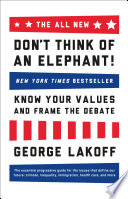
Lakoff extended these ideas across disciplines, co-developing the Neural Theory of Language Project to model how brain circuitry instantiates conceptual systems, influencing philosophy in Philosophy in the Flesh (1999) and mathematics in Where Mathematics Comes From (2000). In politics, his books Moral Politics (1996) and Don't Think of an Elephant! (2004) analyze how conservatives frame issues via "strict father" morality—emphasizing discipline and authority—while progressives draw on "nurturant parent" ideals of empathy and protection, advising left-leaning strategists to reframe debates accordingly. These applications have drawn acclaim for highlighting language's causal role in ideology but criticism for extrapolating linguistic patterns into unverified causal claims about voter psychology, with figures like Steven Pinker challenging the universality and innateness of metaphorical reasoning. Lakoff's work underscores the interplay of cognition and culture, though its empirical validation remains contested amid academia's prevailing interpretive paradigms.
George Lakoff was born on May 24, 1941, in Bayonne, New Jersey , to Herman and Ida Lakoff.
Lakoff completed his undergraduate education at the Massachusetts Institute of Technology , earning a Bachelor of Science in mathematics and English literature in 1962. His final year at MIT aligned with the launch of the university's linguistics program, during which he studied under Noam Chomsky , Roman Jakobson , and Morris Halle, joining Chomsky's inaugural group of students and engaging with foundational ideas in transformational grammar .
After MIT, Lakoff enrolled at Indiana University , initially planning to pursue English literature but shifting to linguistics . He received his PhD in linguistics there in 1966, with early research centered on formal syntactic structures influenced by Chomsky's generative framework. This training laid the groundwork for his subsequent academic career, blending mathematical precision with emerging interests in language cognition.
Lakoff commenced his academic career as a lecturer in linguistics at Harvard University , serving from 1965 to 1969 before departing for a position at the University of Michigan . At Michigan, he held the role of associate professor from 1969 to 1971. In 1972, he joined the University of California, Berkeley as a professor of linguistics , where he remained for the duration of his primary academic tenure .
At Berkeley, Lakoff advanced to the endowed position of Richard and Rhoda Goldman Distinguished Professor of Cognitive Science and Linguistics . He retired in 2016, assuming the status of Professor Emeritus of Linguistics thereafter. During his time at Berkeley, Lakoff contributed to the development of interdisciplinary initiatives in cognitive science , including efforts to incorporate cognitive approaches into the linguistics curriculum .
A key milestone in Lakoff's career was his presidency of the International Cognitive Linguistics Association, reflecting his influence in shaping the field's institutional framework in the late 1980s and beyond. He also served on the governing board of the Cognitive Science Society, underscoring his role in advancing cross-disciplinary collaborations.
Books by George Lakoff
Other works by George Lakoff
More books by this author — not yet covered in our podcast catalog.