Authors & Guests / Friedrich Nietzsche

Friedrich Nietzsche
Friedrich Wilhelm Nietzsche (15 October 1844, Röcken , Prussia – 25 August 1900, Weimar, Germany) was a German philosopher , classical philologist , and cultural critic whose radical critiques of Christianity , morality, and modern culture profoundly shaped 20th-century thought.
Born in the village of Röcken in Prussian Saxony to a Lutheran pastor father who died when Nietzsche was four, he was raised by his mother and pursued studies in theology and philology before focusing on the latter at the University of Leipzig . At age 24, he was appointed the youngest-ever extraordinary professor (equivalent to associate professor) of classical philology at the University of Basel in 1869 and promoted to ordinary professor (full professor) in 1870. Early works like The Birth of Tragedy (1872) reflected influences from Arthur Schopenhauer and Richard Wagner , but Nietzsche soon distanced himself, developing independent ideas including the "death of God" —a diagnosis of secularization's cultural void—the Übermensch as an ideal of self-overcoming, and the will to power as a fundamental drive underlying human behavior and values. Health problems and growing philosophical pursuits led him to resign in 1879 after a decade of service.
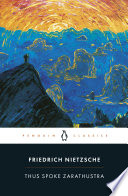
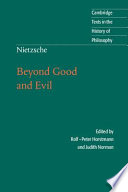
In his mature writings, such as Thus Spoke Zarathustra (1883–1885), Beyond Good and Evil (1886), and On the Genealogy of Morality (1887), he attacked what he termed "slave morality" rooted in resentment and advocated a revaluation of all values to affirm life amid nihilism 's threat.
Nietzsche suffered a collapse on January 3, 1889, in Turin —likely a vascular or neurological event—ending his productive isolation and leaving him incapacitated under his mother's care until her death in 1897 and thereafter his sister's until his death from pneumonia following strokes on August 25, 1900; modern scholarship favors diagnoses such as CADASIL or frontotemporal dementia over syphilis. His sister Elisabeth Förster-Nietzsche posthumously edited his unpublished notes into The Will to Power , introducing distortions aligning his ideas with anti-Semitic and nationalist causes he rejected.
Friedrich Wilhelm Nietzsche was born on October 15, 1844, in Röcken , a small village near Lützen in the Prussian Province of Saxony, to Karl Ludwig Nietzsche, a Lutheran pastor, and his wife Franziska Oehler. The family included a younger sister, Elisabeth, and a younger brother, Karl Ludwig Joseph. Nietzsche's father, who had studied theology and philology, served as pastor in Röcken and embodied a pious, scholarly household environment.
In early July 1849, Nietzsche's father suffered a severe neurological incident, leading to progressive deterioration including loss of speech and sight; he died on July 30, 1849, at age 35, likely from a brain ailment such as a tumor or softening. Six months later, in January 1850, the infant Karl Ludwig Joseph, aged 1, succumbed to a similar condition, leaving Nietzsche as the sole surviving son. The widowed Franziska relocated the family to Naumburg in 1850, where they lived with Nietzsche's paternal grandmother and two aunts, forming a matriarchal household that emphasized piety and education. Nietzsche attended the Naumburg Cathedral School, excelling in classical subjects and music, and in 1856, at age 12, attempted poetry, collaborated with friend Wilhelm Pinder on a private family play titled "The Gods of Olympus" (February 1856), and began keeping a diary (December 26, 1856); he composed early poems and essays reflecting religious themes.
In 1858, at age 14, Nietzsche secured a scholarship to Schulpforta , one of Prussia's premier Protestant boarding schools near Naumburg , renowned for its rigorous classical curriculum.
Episodes
Books by Friedrich Nietzsche
Other works by Friedrich Nietzsche
More books by this author — not yet covered in our podcast catalog.