Authors & Guests / Frederick Forsyth

Frederick Forsyth
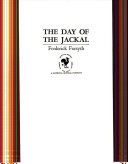
Frederick McCarthy Forsyth (25 August 1938 – 9 June 2025) was a British thriller novelist, former Royal Air Force pilot, and investigative journalist whose debut novel The Day of the Jackal (1971) achieved international acclaim for its detailed depiction of an assassination plot against Charles de Gaulle. Born in Ashford, Kent, to a furrier father, Forsyth left grammar school at 17 to train as one of the RAF's youngest pilots, flying jet aircraft during national service before transitioning to journalism with Reuters and the BBC, where he reported from conflict zones including the Biafran War. His writing career, launched amid financial hardship after being fired from the BBC over controversial reporting, produced over a dozen novels and non-fiction works blending factual research with geopolitical intrigue, such as The Odessa File (1972) and The Dogs of War (1974), amassing sales exceeding 70 million copies worldwide. Forsyth's narratives, informed by his foreign correspondence and alleged brief MI6 recruitment, emphasized technical accuracy and moral ambiguity in intelligence operations, earning adaptations into films and miniseries while reflecting his firsthand exposure to Cold War espionage and African insurgencies.
Frederick McCarthy Forsyth was born on 25 August 1938 in Ashford, Kent, England, to shopkeepers Frederick Sr. and Phyllis Forsyth, who ran a furrier business from the ground floor of their home at 4 North Street while Phyllis operated a dressmaking enterprise upstairs. As the couple's only child, Forsyth grew up in relative comfort in a five-bedroom Edwardian semi-detached house, though his isolation prompted immersion in books, including adventure tales that sparked an early interest in global events and exploits.
The outbreak of World War II shortly after his birth profoundly shaped his formative years; Ashford, near the Kent coast, faced repeated Luftwaffe raids during the Blitz from 1940 onward, leading to Forsyth's evacuation from the area to safer rural locations, a disruption that instilled personal resilience amid the tangible perils of aerial bombardment and authoritarian aggression from Nazi Germany. His family's decision to prioritize safety through relocation underscored the era's pervasive threats, fostering an acute awareness of geopolitical dangers that would influence his later perspectives.
Returning to Ashford in the war's later stages, Forsyth enjoyed a postwar childhood marked by paternal encouragement toward independent pursuits, including exposure to international news via newspapers and budding dreams of aviation, which his father supported despite limited formal early education amid wartime constraints. This environment, blending familial stability with vivid encounters of conflict's realities, cultivated a worldview rooted in empirical threats and individual agency rather than institutional narratives.
Forsyth was educated at Tonbridge School, an independent boarding school in Kent, England, where he displayed a strong aptitude for modern languages, achieving fluency in French, German, and Spanish. This proficiency stemmed partly from his father's arrangement of extended summer immersions in France starting around age 10, followed by similar stays in Germany, which exposed him to colloquial usage beyond classroom instruction. He later supplemented his skills with Russian, learned through private instruction from émigré tutors in Paris.
While excelling linguistically, Forsyth underperformed in other academic areas and grew restive under the school's rigid disciplinary framework, which emphasized conformity over individual initiative. These experiences reinforced his skepticism toward institutionalized education's emphasis on rote structures, prompting him to prioritize hands-on pursuits that aligned with observable causal mechanisms in the real world.
Books by Frederick Forsyth
Other works by Frederick Forsyth
More books by this author — not yet covered in our podcast catalog.