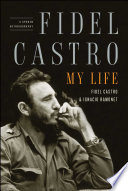
Authors & Guests / Fidel Castro

Fidel Castro
Fidel Alejandro Castro Ruz (August 13, 1926 – November 25, 2016) was a Cuban lawyer and revolutionary who led the armed overthrow of Fulgencio Batista's government in 1959, subsequently establishing a one-party communist regime that he dominated as Prime Minister from 1959 to 1976 and President from 1976 to 2008. Born to a wealthy landowner father in rural Oriente Province, Castro initially pursued legal and political activism against Batista's 1952 coup before turning to guerrilla warfare, launching the 26th of July Movement with the failed Moncada Barracks attack in 1953 and sustaining a protracted campaign from the Sierra Maestra mountains until Batista's flight on January 1, 1959.
Under Castro's leadership, Cuba rapidly transitioned to socialism through mass nationalizations of foreign and domestic enterprises, land reforms redistributing property to the state, and central planning that prioritized ideological conformity over market incentives, fostering economic dependence on Soviet subsidies exceeding $4 billion annually by the 1980s. This model sustained basic social services, including a literacy campaign that raised adult literacy from around 76% in 1953 to near-universal levels by 1961 and expanded healthcare access, yet empirical data indicate these gains lagged behind comparable Latin American nations like Chile and Costa Rica when accounting for pre-revolutionary starting points and the regime's suppression of private enterprise and emigration.
Castro's governance was marked by severe political repression, including the execution of several hundred Batista supporters in revolutionary tribunals shortly after 1959, the imprisonment of thousands of dissidents in labor camps and prisons under harsh conditions, and systematic censorship of media and opposition, as documented by independent monitors despite official denials. The regime's alignment with the Soviet Union during the Cold War escalated tensions with the United States, culminating in events like the failed Bay of Pigs invasion and the 1962 Cuban Missile Crisis, while Castro exported revolution through support for insurgencies in Africa and Latin America, further isolating Cuba economically and contributing to chronic shortages and a mass exodus of over a million citizens via events like the Mariel boatlift. Handing power to his brother Raúl in 2008 due to illness, Castro's legacy endures in Cuba's persistent authoritarianism and underdevelopment, with GDP contracting 35% in the early 1990s after Soviet aid ended, underscoring the causal link between statist policies and long-term material deprivation.
Fidel Alejandro Castro Ruz was born on August 13, 1926, near Birán in Oriente Province, Cuba, the son of Ángel Castro y Argiz, a wealthy landowner of Spanish origin, and Lina Ruz González, who served as a cook and housekeeper on his estate before becoming his common-law wife and eventually marrying him in 1943. Ángel, born in 1875 in Láncara, Galicia, Spain, immigrated to Cuba around 1906, starting as a day laborer in the sugar fields before accumulating substantial landholdings and building a prosperous sugar plantation operation amid the industry's expansion. The couple had seven children together, with Fidel as the third; these offspring were born out of wedlock but later received inheritance advantages comparable to legitimate heirs from Ángel's prior marriage to María Argiz, which produced two children.
The Castro family resided on the expansive rural plantation in Birán, a region dominated by sugarcane cultivation, where Ángel's success provided material comforts rare among most Cubans, including ample food, housing, and resources derived from sugar production.