Authors & Guests / Farley Mowat

Farley Mowat
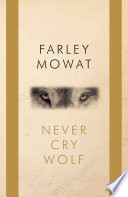
Farley McGill Mowat (May 12, 1921 – May 6, 2014) was a Canadian author and self-described naturalist whose books, such as People of the Deer (1952) and Never Cry Wolf (1963), chronicled experiences with wildlife and northern indigenous groups while advocating for environmental protection , achieving sales of over 17 million copies across dozens of titles.
Enlisting in the Canadian Army during World War II , Mowat served as a second lieutenant in the Hastings and Prince Edward Regiment , leading a platoon in the invasions of Sicily and mainland Italy before transitioning to intelligence duties, experiences later detailed in his memoir And No Birds Sang (1979).
Postwar, Mowat's writing emphasized critiques of industrial encroachment on ecosystems and indigenous ways of life, influencing public attitudes toward conservation, though his accounts often prioritized narrative impact over strict veracity, as evidenced by admissions that he reshaped facts to underscore broader ecological "truths."
Critics, including journalist John Goddard, documented fabrications in works like Sea of Slaughter ( 1984 ), such as invented historical events and exaggerated population declines, prompting defenses from Mowat that literary license amplified authentic advocacy without intending deceit.
Among his honors were the Governor General's Award for Lost in the Barrens (1955), the Stephen Leacock Memorial Medal for Humour (1970), and appointment as an Officer of the Order of Canada in 1981 for contributions to Canadian literature and wildlife preservation.
Farley McGill Mowat was born on May 12, 1921, in Belleville, Ontario , to Angus McGill Mowat and Helen Anne Thomson Mowat, both of Scottish descent. His father, Angus, served as a librarian and had fought in the Battle of Vimy Ridge during World War I , experiences that later influenced family storytelling. The family traced its roots to Loyalist ancestors, including Ephraim Mowat, and Mowat was the great-grandnephew of Ontario Premier Sir Oliver Mowat . As an only child, Mowat grew up in a household that emphasized intellectual pursuits and exploration, with his parents fostering an early affinity for the natural world.
Helen Thomson Mowat, born in 1896 near Trenton, Ontario , came from a family that relocated during her childhood; she met Angus while he was overseas in the war , and they married in 1919. The couple's peripatetic lifestyle, driven by Angus's library positions, led to frequent relocations, including moves to Saskatoon in 1928, Windsor from 1930 to 1933, Toronto , and Richmond Hill. These shifts contributed to Mowat's isolated early years, as the instability hindered sustained friendships with peers.
Mowat's childhood was marked by shyness and a profound, solitary engagement with wildlife , often preferring animal companions over human ones; this bond was encouraged by family outings and his great-uncle Frank Farley's ornithological expeditions, including an early Arctic trip that sparked lifelong fascinations. By his early teens in Windsor, he began documenting observations in writing, laying groundwork for his future career. The family's eccentric, nature-oriented environment, free from rigid conventions, nurtured his adventurous spirit amid these transient settings.
Mowat developed an early fascination with wildlife during his childhood in Ontario and Saskatchewan , where he spent much time observing birds and mammals in natural settings. Born in Belleville, Ontario , in 1921, he moved with his family to Saskatoon , Saskatchewan , around 1928, fostering his interests amid the prairies and wetlands. At age 13, he founded the Beaver Club of Amateur Naturalists and launched a newsletter called Nature Lore , while contributing an "Owls in the Family" column to the Saskatoon Star-Phoenix on local bird observations.
Books by Farley Mowat
Other works by Farley Mowat
More books by this author — not yet covered in our podcast catalog.