Authors & Guests / Eugen Herrigel

Eugen Herrigel
Eugen Herrigel (20 March 1884 – 18 April 1955) was a German philosopher and author renowned for Zen in the Art of Archery , a 1948 book detailing his immersion in kyūdō , the Japanese art of archery , as a pathway to Zen Buddhist insight. Born in Lichtenau near Heidelberg , Herrigel studied theology and neo-Kantian philosophy at the University of Heidelberg before pursuing an academic career that led him to Tohoku Imperial University in Sendai , Japan , where he taught philosophy from 1924 to 1929. During his time in Japan , dissatisfied with abstract intellectual approaches to Zen , he apprenticed under master archer Awa Kenzō, emphasizing mental discipline over technical precision to achieve an egoless state where action arises spontaneously. The resulting work, originally a lecture expanded into print, profoundly influenced Western perceptions of Zen by illustrating principles of non-duality and effortless action through the metaphor of archery , though subsequent analyses, such as Shoji Yamada's Shots in the Dark , have contested its historical accuracy and portrayal of authentic kyūdō and Zen traditions as embellished or culturally filtered.
Eugen Herrigel was born on 20 March 1884 in Lichtenau, a small municipality near Heidelberg in the Grand Duchy of Baden , which was part of the German Empire at the time. Lichtenau, located in a rural area of Baden-Württemberg , provided a provincial setting typical of late 19th-century German communities, though specific details of his family background or immediate household remain undocumented in primary accounts.
Herrigel's upbringing occurred amid the cultural and intellectual currents of Wilhelmine Germany , fostering an early interest in scholarly pursuits. By his late teens, he had enrolled at Heidelberg University , initially focusing on theology before shifting to philosophy , reflecting a formative exposure to Protestant intellectual traditions and emerging neo-Kantian thought prevalent in the region. This transition underscored a personal evolution from religious studies toward metaphysical inquiry, setting the stage for his later philosophical career , though records of his pre-university education or familial influences are limited.
Eugen Herrigel commenced his higher education at the University of Heidelberg, where he initially studied evangelical theology before transitioning to philosophy. His philosophical training centered on neo-Kantianism and German Idealism, particularly the Southwest German school and the Neo-Kantian "Heidelberg School," under the guidance of Wilhelm Windelband , Emil Lask , and Heinrich Rickert . This approach emphasized epistemological rigor, the philosophy of values, distinctions between cultural and natural sciences, and explorations of the "irrational" foundations of logic, shaping Herrigel's early scholarly orientation toward methodological precision in philosophical inquiry. Herrigel's engagement with this tradition extended to editorial work, including the preparation of volumes from the collected writings of Emil Lask, a prominent neo-Kantian thinker and student of Rickert, which underscored his focus on logic, categories, and the foundations of knowledge. Driven by a lifelong preoccupation with German mysticism, particularly Meister Eckhart, this foundational training in systematic philosophy informed his later explorations of mysticism and Eastern thought, though rooted in Western rationalist frameworks; it also motivated his pursuit of an empirical experience of the "Irrational," which he believed was absent in Western philosophy.
Educated in the tradition of Neo-Kantianism and German Idealism, Eugen Herrigel accepted an invitation in 1924, while a lecturer at the University of Heidelberg, to serve as a lecturer in philosophy at Tohoku Imperial University (now Tohoku University) in Sendai, Japan.
Books by Eugen Herrigel
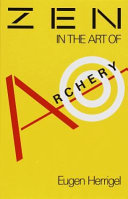
Other works by Eugen Herrigel
More books by this author — not yet covered in our podcast catalog.