Authors & Guests / Edzard Ernst

Edzard Ernst
Edzard Ernst (born 1948) is a German-born British academic physician and researcher renowned for establishing the world's first Chair in Complementary Medicine at the University of Exeter in 1993, where he served until his early retirement in 2011 and was subsequently named Emeritus Professor. Qualifying as a physician in 1977 after studying medicine and psychology at Ludwig Maximilians University in Munich, Ernst initially trained in various alternative therapies before shifting to rigorous scientific evaluation of their claims.
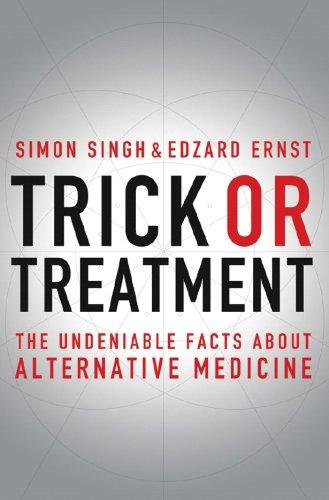
Ernst's career is defined by over 1,000 peer-reviewed publications ( h-index 152) and more than 50 books, including Trick or Treatment: The Undeniable Facts about Alternative Medicine co-authored with Simon Singh , which apply empirical standards to assess therapies like homeopathy and acupuncture , often finding insufficient evidence of efficacy beyond placebo effects or potential harms. His work emphasizes causal mechanisms grounded in clinical trials and systematic reviews, challenging unsubstantiated practices within complementary and alternative medicine ( SCAM ). This approach garnered 17 scientific awards, such as the 2015 John Maddox Prize for defending evidence-based science, and election to Academia Europaea in 2022.
Notable controversies arose from Ernst's critiques of influential proponents, including public disputes with Prince Charles over the promotion of unproven remedies like homeopathy and detox products, leading to formal complaints against him and scrutiny of his university affiliations. His early retirement, two years before the official age, coincided with the exhaustion of departmental funding from the Laing Foundation amid these tensions, though he continued independent research and blogging on evidential shortcomings in alternative medicine .
Edzard Ernst was born on 30 January 1948 in Germany , shortly after World War II , during a period of national reconstruction following the Allied defeat of the Third Reich. His family had suffered considerable losses and hardships amid the conflict, including an uncle who had served as a general in the Waffen-SS . These circumstances shaped a childhood marked by the stark realities of post-war recovery in Bavaria , where Ernst initially attended school.
Ernst's education extended briefly to the United States, providing early exposure to contrasting cultural attitudes toward health and wellness compared to those in Germany. This transatlantic experience highlighted differences in medical practices and societal views on treatment, broadening his perspective beyond European norms.
Hailing from a lineage of physicians—his father and grandfather both practiced medicine and, in line with common German medical customs of the time, prescribed homeopathic remedies —Ernst encountered such alternative therapies personally as a teenager for minor ailments. This familial integration of homeopathy into routine care instilled an initial receptivity to non-conventional methods, predisposing him toward exploring holistic dimensions of health before rigorous scientific scrutiny later tempered these views.
Ernst studied psychology and medicine concurrently at Ludwig Maximilian University of Munich , graduating with qualifications in both disciplines.
In 1977, he passed the state examination and qualified as a physician in Munich .
Following this, he completed his MD thesis and subsequently his PhD at institutions in Germany , focusing on aspects of clinical research that bridged physiological and psychological dimensions of patient care.
Following his qualification as a physician in Germany in 1978, Ernst commenced his clinical practice at the homeopathic hospital in Munich , the country's only institution dedicated exclusively to homeopathic treatment at the time.
Books by Edzard Ernst
Other works by Edzard Ernst
More books by this author — not yet covered in our podcast catalog.