Authors & Guests / Edvard Radzinsky

Edvard Radzinsky
Edvard Stanislavovich Radzinsky (born 23 September 1936) is a Russian playwright, biographer, screenwriter, and television presenter specializing in the dramatic reconstruction of Russian historical figures and events. Radzinsky first gained prominence in the 1960s through his plays, which explored psychological and historical themes, establishing him as one of Russia's celebrated dramatists. Following the Soviet Union's collapse, he leveraged access to newly opened archives to author over forty non-fiction books, including bestsellers such as The Last Tsar: The Life and Death of Nicholas II (1992), Stalin (1996), and The Rasputin File (2000), which draw on primary documents to challenge established narratives. As a television host, Radzinsky presented the series Mysteries of History on Russian national television, popularizing enigmatic aspects of the past through archival footage and personal analysis, which contributed to his status as a media figure. His works emphasize the outsized role of individual personalities in shaping historical causality, often prioritizing declassified evidence over ideological interpretations, though critics have questioned some speculative elements in his biographical reconstructions, such as alternative accounts of Stalin's death.
Edvard Radzinsky was born on September 23, 1936, in Moscow, Soviet Union, into an intellectual family shaped by the cultural and repressive milieu of Stalinist Russia. His father, Stanislav Adolfovich Radzinsky (1889–1969), was a playwright and screenwriter of Polish descent from Odessa, whose own father had been a prosperous merchant before the Bolshevik Revolution; Stanislav joined the Soviet Writers' Union and contributed to theater and film scripts amid the era's ideological constraints. His mother, Sofia Yuryevna Radzinskaya (née Zhdanova), hailed from the Yaroslavl region and worked as a senior investigator in the Soviet legal system, a role that exposed the family to the machinery of state repression during the Great Purges and beyond.
Radzinsky was the sole surviving child of his parents, as earlier children did not survive infancy, reflecting the high infant mortality rates common in the Soviet Union of the 1930s due to famine, purges, and inadequate healthcare. Growing up in Moscow's literary circles, he was immersed in discussions of drama and history , though the family's Jewish heritage and father's pre-revolutionary roots likely imposed caution amid antisemitic campaigns and political surveillance. In his early years, Radzinsky pursued physical activities, playing football and boxing , but a boxing injury to his left eye redirected him toward reading and intellectual pursuits by adolescence.
This family environment, blending creative ambition with the perils of Soviet bureaucracy, fostered Radzinsky's later affinity for historical inquiry, as parental narratives of tsarist and revolutionary eras contrasted with official propaganda.
Edvard Radzinsky attended the Moscow State Historical-Archival Institute, graduating in 1960 with training as a historian and archivist . This education provided foundational skills in archival research and historical analysis, which he initially applied in professional pursuits before shifting to creative writing . The institute's curriculum emphasized document preservation and interpretation amid the Soviet system's constraints on historical inquiry.
Raised in a Moscow intelligentsia family—his father, Stanislav Radzinsky, was a playwright —Edvard encountered early exposure to literary and dramatic traditions that shaped his artistic inclinations. This environment, coupled with the post-Stalin cultural thaw of the late 1950s , encouraged his initial forays into playwriting during his student years, blending historical rigor with narrative experimentation. Such influences diverged from his formal archival path, foreshadowing his later synthesis of drama and historiography .
Books by Edvard Radzinsky
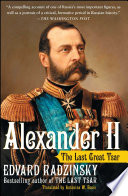
Other works by Edvard Radzinsky
More books by this author — not yet covered in our podcast catalog.