Authors & Guests / David S. Lifton

David S. Lifton
David Samuel Lifton (September 20, 1939 – December 6, 2022) was an American author and independent researcher whose work focused on discrepancies in the medical evidence surrounding the assassination of President John F. Kennedy . A Cornell University engineering physics graduate, Lifton shifted from aerospace and computer engineering careers to full-time investigation after questioning the official narrative in 1964, culminating in his thesis that Kennedy's corpse was clandestinely altered en route from Dallas to Bethesda Naval Hospital to fabricate a lone-gunman scenario.
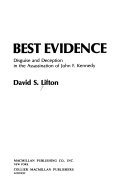
Lifton's seminal 1981 book, Best Evidence: Disguise and Deception in the Assassination of John F. Kennedy , a commercial success that sold widely and influenced subsequent skepticism toward the Warren Commission , drew on affidavits, hospital records, and witness accounts of wound inconsistencies—such as throat and back entry wounds reported in Dallas versus exit wounds documented later—to posit surgical intervention by conspirators during the body's transport. His analysis emphasized chain-of-custody breaks, including unaccounted time gaps on Air Force One and casket discrepancies, challenging autopsy integrity without relying on ballistics or motives.
Though praised by some for forensic rigor in highlighting empirical anomalies—like differing skull X-rays and brain weights—Lifton's body-alteration hypothesis faced sharp rebuttals from establishment-aligned researchers, who deemed it logistically improbable amid Secret Service custody, underscoring ongoing debates over source reliability in assassination studies where official records often conflict with contemporaneous testimonies. Later works, including The Girl on the Stairs (2013) probing a potential Oswald witness, and a self-produced documentary, extended his scrutiny of Oswald's biography and Dealey Plaza events, maintaining his commitment to evidentiary primacy over consensus views.
David Samuel Lifton was born on September 20, 1939, in New York. Biographical accounts provide scant details on his family origins or early upbringing, with no publicly documented information on his parents, siblings, or specific childhood circumstances. Lifton's formative years appear to have emphasized academic pursuits in science, as evidenced by his later enrollment at Cornell University , though direct connections to family influences remain unelucidated in available sources.
David Lifton earned a bachelor's degree in engineering physics from Cornell University's School of Engineering Physics in 1962. Following graduation, he enrolled in a graduate program in engineering physics at the University of California, Los Angeles (UCLA), where he was pursuing an advanced degree as of November 1963.
In his professional career prior to intensifying his focus on the JFK assassination, Lifton worked as a computer engineer for North American Aviation in Los Angeles , a firm involved in aerospace projects including components of NASA's Apollo program . This role leveraged his technical training in physics and engineering, applying computational methods to engineering challenges in the space industry .
In late 1964, David Lifton, a 25-year-old graduate student in engineering at the University of California, Los Angeles , attended a public lecture by attorney Mark Lane, who challenged the Warren Commission's conclusion that Lee Harvey Oswald acted alone in assassinating President John F. Kennedy . The event, which coincided with Lifton's birthday on September 20, initially drew him out of casual curiosity, but Lane's presentation of evidentiary inconsistencies prompted Lifton to doubt the official account for the first time.
Prompted by this exposure, Lifton used his income tax refund to purchase the 26-volume set of the Warren Commission Report, hearings, and exhibits, totaling over 13,000 pages, released on September 27, 1964.