Authors & Guests / Dave Grossman

Dave Grossman
David Allen Grossman (born August 23, 1956) is an American retired lieutenant colonel in the United States Army, author, and scholar specializing in the psychology of human aggression, combat, and lethal force. A former U.S. Army Ranger, paratrooper , and professor of psychology at the United States Military Academy at West Point, Grossman served over 23 years in the military before retiring in 1998. He founded the Killology Research Group to study the enabling and inhibiting factors of killing, serving as an expert witness in high-profile cases such as United States v. Timothy McVeigh and testifying before U.S. Congress and state legislatures on violence prevention.
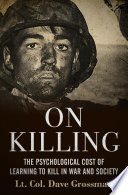
Grossman's seminal works, including On Killing: The Psychological Cost of Learning to Kill in War and Society (1995), which has sold over 500,000 copies and been translated into multiple languages, argue that humans possess an innate resistance to killing fellow humans, overcome historically through conditioning in warfare and modern training. Subsequent books such as On Combat: The Psychology and Physiology of Deadly Conflict in War and in Peace (2004) and Assassination Generation extend his analysis to physiological responses in conflict and societal violence trends, including media influences on youth aggression. His research draws on historical battle data, empirical studies of soldier behavior, and first-hand military insights to emphasize causal mechanisms in violence , positioning him as a key figure in training elite military units, law enforcement , and first responders worldwide.
A defining element of Grossman's teachings is the "sheep, wolves, and sheepdogs " analogy, which categorizes society into peaceful civilians (sheep), predators (wolves), and protective warriors like soldiers and police (sheepdogs) who possess the capacity for controlled violence to safeguard the vulnerable. This framework, outlined in his essay and incorporated into seminars, has gained traction among protective services for reinforcing a guardian mindset but has faced criticism from policing reform advocates and media outlets for allegedly promoting dehumanization of suspects and a hyper-vigilant " warrior " culture that could contribute to excessive force incidents. Despite such pushback, often from sources skeptical of robust law enforcement tactics, Grossman's empirical focus on kill rates, post-traumatic stress correlates, and conditioning effects continues to inform professional training across dozens of countries.
David Allen Grossman was born on August 23, 1956, in Frankfurt , West Germany . His birth abroad reflected the peripatetic lifestyle common to families of U.S. military personnel stationed in Europe during the Cold War era.
Grossman was raised in the United States within a family environment steeped in law enforcement traditions, which exposed him to themes of authority, protection, and confrontation from a young age. In reflecting on his formative influences, he has highlighted the impact of science fiction literature, particularly Robert A. Heinlein's Starship Troopers , which emphasized citizenship through service, resilience under duress, and the moral dimensions of violence in defense of society. These early readings fostered an intellectual curiosity about human behavior in extreme circumstances, laying groundwork for later explorations of psychological responses to aggression and heroism, though Grossman himself attributes such interests more directly to personal reflections rather than explicit family teachings on the subject.
Grossman obtained a Bachelor of Science degree summa cum laude from Columbus College in Columbus, Georgia , in 1984.
He later earned a Master of Education in counseling psychology from the University of Texas at Austin in 1990, emphasizing practical applications in human behavior and stress response over purely theoretical frameworks.
Books by Dave Grossman
Other works by Dave Grossman
More books by this author — not yet covered in our podcast catalog.