Authors & Guests / Cormac McCarthy

Cormac McCarthy
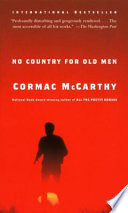
Cormac McCarthy (born Charles Joseph McCarthy Jr.; July 20, 1933 – June 13, 2023) was an American novelist, playwright , and screenwriter renowned for his sparse, poetic prose and unflinching examinations of violence , morality , and the human condition, often set against the harsh landscapes of the American South and Southwest. His works, which include twelve novels, two plays, and several screenplays, blend elements of Southern Gothic and Western traditions, featuring complex narratives driven by instinctual characters and vivid regional dialogue. McCarthy's reclusive personal life and deliberate avoidance of publicity contributed to his mythic status in contemporary literature , with his influence extending to adaptations like the films No Country for Old Men (2007) and The Road (2009).
Born in Providence, Rhode Island , as the third of six children to a prominent lawyer father, McCarthy moved with his family to Knoxville, Tennessee , in 1937, where he spent much of his formative years. He briefly attended the University of Tennessee from 1951 to 1952 and again from 1957, publishing early short stories in the student literary magazine The Phoenix , though he left without earning a degree in 1960 after receiving an Ingram Merrill Foundation grant to pursue writing full-time. After serving in the U.S. Air Force (1953-1957), McCarthy returned to the University of Tennessee from 1957 to 1959. He later traveled in Europe on a fellowship (1965-1966) and settled in the Southwest in the late 1970s, experiences that shaped the geographic and thematic scope of his fiction.
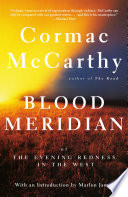
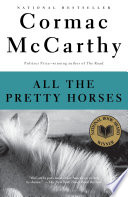
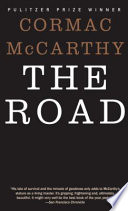
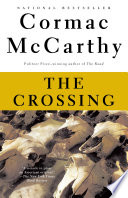
McCarthy's literary career began with The Orchard Keeper (1965), his debut novel set in the Appalachian South, which earned the William Faulkner Foundation Award for a notably promising writer under forty. He followed with early works like Outer Dark (1968), Child of God (1974), and Suttree (1979), establishing his reputation for dark, introspective Southern tales, before transitioning to the epic Western violence of Blood Meridian (1985). The 1990s brought commercial breakthrough with the Border Trilogy — All the Pretty Horses (1992), The Crossing (1994), and Cities of the Plain (1998)—the first of which won both the National Book Award for Fiction and the National Book Critics Circle Award . Later masterpieces included No Country for Old Men (2005), adapted into an Academy Award-winning film, and The Road (2006), a post-apocalyptic father-son odyssey that secured the 2007 Pulitzer Prize for Fiction . McCarthy also received a MacArthur Fellowship in 1981, recognizing his innovative contributions to American fiction.
In his later years, McCarthy resided in Santa Fe, New Mexico , where he was a fellow at the Santa Fe Institute , exploring interdisciplinary interests in language and science alongside his writing. He published his final novels, The Passenger and Stella Maris (both 2022), delving into themes of grief and consciousness , before his death at age 89 from natural causes. McCarthy's oeuvre, marked by biblical undertones and philosophical depth, has cemented his place as one of the most influential American authors of the late 20th and early 21st centuries, with his works translated into numerous languages and studied for their linguistic precision and existential weight.
Cormac McCarthy was born Charles Joseph McCarthy Jr. on July 20, 1933, in Providence, Rhode Island , to Charles Joseph McCarthy, a lawyer , and Gladys Christina McGrail McCarthy. He was the third of six children, with older sisters Jackie and Bobbie, and younger siblings Bill, Maryellen, and Dennis.
In 1937, when McCarthy was four years old, his family relocated to Knoxville, Tennessee , where his father joined the legal staff of the Tennessee Valley Authority . The family initially lived in the Sequoyah Hills neighborhood before moving to a house on Martin Mill Pike.
Books by Cormac McCarthy
Other works by Cormac McCarthy
More books by this author — not yet covered in our podcast catalog.