Authors & Guests / Constantin Stanislavski

Constantin Stanislavski
Konstantin Sergeyevich Stanislavski (born Konstantin Sergeyevich Alekseyev; 5 January 1863 – 7 August 1938) was a Russian theatre practitioner, actor, and director who co-founded the Moscow Art Theatre and originated the Stanislavski system, a methodical approach to actor training focused on psychological realism and authentic emotional expression. Born into a prosperous Moscow merchant family, Stanislavski pursued acting from a young age, initially as an amateur, before formalizing his innovations through systematic experimentation in rehearsal techniques and character analysis. In 1898, he collaborated with Vladimir Nemirovich-Danchenko to establish the Moscow Art Theatre, which prioritized ensemble discipline, detailed environmental realism, and truthful interpersonal dynamics over melodramatic conventions prevalent in imperial Russian theatre. The theatre's landmark productions, including premieres of Anton Chekhov's works like The Seagull and Uncle Vanya , demonstrated Stanislavski's emphasis on subtext and internal motivation, elevating naturalistic drama and influencing global stage practices. His system—encompassing "given circumstances," sense memory, and the "magic if"—provided actors with tools to inhabit roles convincingly by drawing on personal experiences while maintaining objective control, a framework that reshaped training in Europe and America despite later adaptations diverging from his original intent.
Konstantin Sergeyevich Alekseyev, who adopted the stage name Stanislavski in 1884, was born on January 17, 1863, in Moscow to one of the city's wealthiest merchant families. His father, Sergei Alekseyev, was a third-generation industrialist who owned successful manufacturing enterprises, including textile dyeing operations, and amassed significant fortune through trade. His mother, Elena Vasilievna (née Varlamova), descended from French heritage, with her mother having been a professional actress , infusing the household with artistic inclinations. The Alekseyev family resided in opulent estates, one of which featured a private stage constructed by the father to host amateur performances, reflecting their privileged status and cultural engagement amid Russia's merchant elite.
As the second of nine children in a devout Russian Orthodox household, young Konstantin grew up surrounded by siblings who shared in familial entertainments that emphasized music, literature , and drama. The family's affluence allowed for extensive exposure to the arts , including attendance at professional theaters in Moscow , but initial theatrical involvement remained domestic and amateur. This environment, free from financial pressures, enabled early experimentation without professional ambitions, though Stanislavski later concealed his stage activities from his parents using his pseudonym to maintain social decorum.
Stanislavski's first documented stage appearance occurred around age 7, circa 1870, in tableaux vivants staged for his mother's name-day celebration, marking an informal entry into performative arts. By 1877, at age 14, he actively participated in the Alekseyev Circle, an amateur dramatic society organized within the extended family , cousins, and friends, which produced four one-act plays on the estate's stage that year. These productions, drawing on classical and contemporary repertoire , served as his foundational training, honing skills in acting and rudimentary directing while reinforcing the family's tradition of theatrical self-entertainment over commercial pursuits.
Stanislavski commenced his involvement in theater through family-hosted amateur performances in the Alekseyev household, which regularly featured concerts and theatricals involving both adults and children from Moscow society. These early exposures, beginning in his childhood, provided initial opportunities for acting experimentation within a supportive merchant family environment.
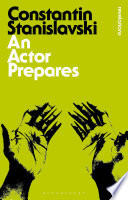
Books by Constantin Stanislavski
Other works by Constantin Stanislavski
More books by this author — not yet covered in our podcast catalog.