Authors & Guests / Cixin Liu

Cixin Liu
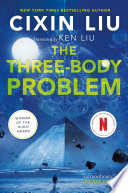
Liu Cixin (Chinese: 刘慈欣; born 1963) is a Chinese science fiction author and engineer recognized as a leading voice in contemporary Chinese science fiction . Best known for his Remembrance of Earth's Past trilogy, which includes The Three-Body Problem (2008), The Dark Forest (2008), and Death's End (2010), Liu has won China's Galaxy Award for science fiction nine times. The English translation of The Three-Body Problem , published in 2014, secured the Hugo Award for Best Novel in 2015, marking the first win for an Asian writer in that category. His narratives emphasize hard science fiction elements, drawing on cosmology, game theory , and technological determinism to explore humanity's existential challenges against cosmic backdrops. Liu, who grew up in the coal-mining town of Yangquan, Shanxi , after being born in Beijing , continues to work as an engineer at a local power plant, informing the empirical rigor of his speculative visions. While his works have elevated Chinese science fiction 's global profile, they have drawn scrutiny for portraying cultural and technological hierarchies in interstellar contexts, reflecting unvarnished realist assessments of power dynamics over egalitarian ideals.
Liu Cixin was born on June 23, 1963, in Beijing , but his family soon relocated to Yangquan, a coal-mining city in Shanxi Province, due to his father's reassignment from the Coal Mine Design Institute to work in the local mines. His father, who had served as a company commander in the Communist Eighth Route Army during the civil war , held a managerial role that necessitated the move amid China's industrial pushes in the early 1960s. This shift immersed the young Liu in the gritty environment of Shanxi 's mining industry, where his parents—his mother an elementary school teacher—adapted to the demands of resource extraction in northern China's rugged terrain.
In Yangquan, Liu's earliest years exposed him to the province's industrial-rural interface, fostering an initial curiosity about the natural world through direct observation amid limited formal resources. At age six, China's launch of its first satellite, Dong Fang Hong 1 , in April 1969, ignited his obsession with space exploration , marking a pivotal moment in directing his interests toward physics and astronomy despite the era's scarcities in educational materials. His father further nurtured this by providing a copy of Jules Verne's A Journey to the Center of the Earth , introducing speculative ideas that contrasted with the tangible machinery and geology of Shanxi's mines. These familial and environmental factors laid the groundwork for Liu's enduring emphasis on empirical scientific reasoning over abstract narratives.
Liu Cixin, born in 1963, lived through the Cultural Revolution from ages three to thirteen, with his family relocated to Yangquan in Shanxi Province after his father, a manager at the Coal Mine Design Institute, lost his job due to suspected political unreliability stemming from a relative's Nationalist ties. The family worked in the local coal mines, and at around age four in 1967, Liu was sent to live with his grandparents in Henan Province for several years to escape the factional violence in Yangquan, where he later recalled hearing nighttime gunfire and observing armed factions identified by red armbands.
These disruptions, including familial displacement and exposure to social unrest and persecution , marked his early years, during which he witnessed widespread violence that shaped his heightened sensitivity to societal crises compared to later generations. In the final years of the period, while in primary school amid a sparse cultural landscape with suppressed media and limited formal access to literature , Liu engaged in self-directed exploration, such as experimenting with homemade gunpowder and secretly reading hidden translations of science fiction by authors like Jules Verne and H.G.
Books by Cixin Liu
Other works by Cixin Liu
More books by this author — not yet covered in our podcast catalog.