Authors & Guests / Bob Woodward

Bob Woodward
Robert Upshur Woodward (born March 26, 1943) is an American investigative journalist who gained prominence at The Washington Post for co-reporting the Watergate scandal with Carl Bernstein , a series of articles that exposed criminal activities in President Richard Nixon's administration and contributed causally to Nixon's resignation in 1974. After graduating from Yale University in 1965, Woodward served five years as a communications officer in the U.S. Navy before joining the Post in 1971. Over his career, he has authored or co-authored 21 books on U.S. presidents and government operations, with 15 reaching #1 on national bestseller lists, including accounts of administrations from Nixon through Biden. While Woodward's work has earned acclaim for penetrating official secrecy through extensive interviews, his methodology—relying extensively on unnamed sources and limited corroboration—has faced persistent criticism for undermining verifiability, enabling potential misinformation , and shielding insiders from accountability .
Robert Upshur Woodward was born on March 26, 1943, in Geneva, Illinois, to Alfred E. Woodward, a lawyer who served as chief judge of the 18th Judicial Circuit Court, and his wife Jane (née Upshur). The family resided in Wheaton, a suburb of Chicago, where Woodward spent his early years amid a household influenced by his father's legal prominence. Alfred Woodward, who had joined the U.S. Navy as a judge advocate in 1943 shortly after his son's birth, embodied a tradition of public service that shaped family expectations, with the elder Woodward envisioning a legal path for his son.
Woodward grew up in Wheaton, Illinois, following his family's move from Geneva, and completed his secondary education there prior to university. He enrolled at Yale University in 1961 on a Naval Reserve Officers' Training Corps (NROTC) scholarship.
At Yale, Woodward studied history and English, earning a Bachelor of Arts degree in 1965. His coursework emphasized analytical reading and writing skills, which later informed his investigative journalism approach, though he initially considered law school after graduation. The NROTC program provided structured discipline and exposure to military protocol, bridging his academic experience to subsequent naval service.
Following his graduation from Yale University in 1965, Bob Woodward entered active duty in the United States Navy through the Naval Reserve Officers' Training Corps (NROTC) program, with his service extended from four to five years due to the Vietnam War . He served as a communications officer, initially aboard the USS Wright (CC-2), a command and communications ship, where he was one of two officers responsible for handling nuclear launch codes. Later, he transferred to the USS Fox (DLG-33), a guided-missile frigate operating off the coast of Vietnam , managing the ship's radio team. In 1969, Woodward received the Navy Commendation Medal for his performance in these roles.
In 1969–1970, Woodward was assigned to the Pentagon under Admiral Thomas Moorer, Chairman of the Joint Chiefs of Staff, where he managed the communications center and delivered daily briefings on classified materials to senior military leaders, including trips to the White House to relay documents from Moorer. These duties involved sensitive national security information, leading some observers to describe his work as akin to intelligence handling, though Woodward has consistently maintained that he was strictly in naval communications, distinct from intelligence operations in the Navy's structure. During this period, as a lieutenant, he contacted FBI Associate Director W. Mark Felt regarding a discrepancy in Pentagon message coding, initiating a relationship that later proved significant in his journalistic career.
Woodward was honorably discharged in August 1970 at the rank of lieutenant .
Books by Bob Woodward


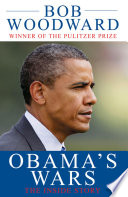
Other works by Bob Woodward
More books by this author — not yet covered in our podcast catalog.