Authors & Guests / Benjamin Labatut

Benjamin Labatut
Benjamín Labatut (born 1980) is a Chilean writer renowned for his hybrid narratives that fuse rigorous historical research with fictional invention, probing the human cost and philosophical implications of groundbreaking scientific advancements. His works, often described as "fictitious biographies," delve into the minds of pivotal figures in science and mathematics , exploring themes of genius , madness, and moral ambiguity at the frontiers of knowledge. Writing in Spanish, Labatut has achieved international prominence for his innovative approach, which challenges conventional boundaries between nonfiction and fiction .
Born in Rotterdam, Netherlands, Labatut spent his early years moving between countries, living in the Netherlands until age two, then in Chile until seven, returning to the Netherlands for schooling in The Hague until fourteen, before his family settled permanently in Santiago, Chile , where he resides today. He began his literary career with two award-winning works of fiction published in the late 2000s and 2010s, establishing his reputation in Latin American literary circles. Labatut's breakthrough came with Un verdor terrible (2016), translated into English as When We Cease to Understand the World (2020), a novella-length exploration of scientists like Fritz Haber and Erwin Schrödinger whose discoveries reshaped the world but exacted profound personal tolls. The book, which blends documented events with imagined inner monologues, was shortlisted for the 2021 International Booker Prize and the 2021 National Book Award for Translated Literature, and named one of The New York Times ' 10 Best Books of 2021.
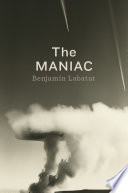
In his subsequent novel, The MANIAC (2023), Labatut turns to the life of polymath John von Neumann , tracing his contributions to the atomic bomb, game theory , and early computing, while interweaving stories of chess, Go, and artificial intelligence to question the trajectory of technological progress. Praised for its vivid portrayal of intellectual fervor bordering on obsession, the work was selected as one of Barack Obama's favorite books of 2023 and featured on year-end lists from The Washington Post and Publishers Weekly . Labatut's oeuvre continues to garner critical acclaim for illuminating the "dark side" of innovation, earning him comparisons to authors like W.G. Sebald and Roberto Bolaño .
Benjamín Labatut was born in 1980 in Rotterdam , the Netherlands , to Chilean parents of mixed European heritage—his mother half Italian and his father half French.
The family relocated to Santiago, Chile , when Labatut was two years old, returning to his parents' native country and establishing roots in the capital city.
Labatut spent his early childhood in Santiago until the age of eight, when his parents departed for professional reasons, leaving him in the care of his grandparents. This arrangement immersed him in a stable family environment in Chile amid the initial phases of the family's nomadic lifestyle.
Labatut's childhood was characterized by frequent relocations across continents, reflecting his family's nomadic lifestyle driven by his father's work commitments. After his parents moved to The Hague at age eight, Labatut remained in Chile with his grandparents until age thirteen, when he joined them in the Netherlands . He spent the following year there, immersed in a multicultural environment that included attending a British school. At age fourteen, his family settled permanently in Santiago, Chile .
His family had also briefly resided in Lima, Peru, during this period, though he spent limited time there, contributing to a fragmented sense of place that he later described as "rootless" and disorienting. As an adolescent, he spent considerable time in Buenos Aires, Argentina, forging connections that deepened his exposure to South American culture, though he noted becoming acquainted with the country more fully as an adult.
Books by Benjamin Labatut
Other works by Benjamin Labatut
More books by this author — not yet covered in our podcast catalog.