Authors & Guests / Anton Chekhov

Anton Chekhov
Anton Pavlovich Chekhov (29 January 1860 – 15 July 1904) was a Russian physician, short-story writer, and playwright whose works emphasized clinical observation of human behavior , subtle psychological depth, and the mundane absurdities of everyday life, establishing him as a foundational figure in modern realist literature. Born into a struggling merchant family in the southern port town of Taganrog , Chekhov endured a harsh upbringing marked by his father's authoritarian discipline and eventual bankruptcy, which forced the family to relocate to Moscow while he remained to complete his education. He enrolled in Moscow University's medical school in 1879, graduating in 1884, and began publishing humorous vignettes and sketches under pseudonyms to financially support his relatives, amassing over four hundred short pieces by the early 1890s that honed his signature style of concise, implication-rich narratives devoid of moralizing or sentimentality.
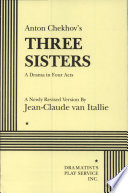
Chekhov's dramatic output, though initially met with mixed reception, includes four major plays— Ivanov (1887), The Seagull (1896), Uncle Vanya (1899), Three Sisters (1901), and The Cherry Orchard (1904)—that shifted theatrical conventions toward indirect action, fragmented dialogue, and the portrayal of inertia in provincial Russian society, influencing subsequent playwrights through their focus on ensemble dynamics and unspoken tensions rather than contrived plots. Paralleling his literary career, Chekhov maintained a medical practice, describing medicine as his "lawful wife" and literature as his "mistress," and applied his diagnostic precision to social ills, notably in his 1890 expedition to Sakhalin Island, where he surveyed the penal colony's squalid conditions, interviewed thousands of inmates and exiles, and authored The Island of Sakhalin (1893–1895), a factual exposé that prompted penal reforms and highlighted systemic failures in tsarist administration. He also funded rural schools, clinics, and famine relief efforts from his estates, embodying a pragmatic humanitarianism grounded in empirical intervention over ideological rhetoric. Afflicted with tuberculosis from his twenties, Chekhov continued writing and practicing until his death in a German spa town, leaving a legacy of works that dissect the quiet desperations and unfulfilled aspirations of ordinary individuals with unflinching detachment.
Anton Pavlovich Chekhov was born on January 29, 1860, in Taganrog, a port city on the Sea of Azov in southern Russia, into a merchant family of modest means. He was the third of six children—three sons and three daughters—born to Pavel Yegorovich Chekhov and Yevgeniya Yakovlevna Morozova, who had married in 1854. The family lived in cramped quarters above Pavel's grocery shop, where the children, including Anton, were required to assist from a young age with tasks such as fetching water, cleaning, shopping, and serving customers.
Pavel Chekhov, originally from a serf background—his own father had purchased the family's freedom prior to emancipation —was a devout Orthodox Christian who enforced rigorous religious observance and discipline on his household, often compelling the children to participate in church choir duties and memorize psalms . This authoritarian approach, combined with the demands of the family business, left little room for unstructured play, instilling in Anton both resentment toward his father's tyranny and an early familiarity with labor and poverty . In contrast, Yevgeniya provided a softer influence; as the daughter of a prosperous cloth merchant , she drew on her own experiences of travel and storytelling to entertain and educate her children, fostering Anton's imaginative faculties despite the household's constraints.
The siblings included older brothers Alexander (born 1855) and Nikolai (born 1858), younger brother Mikhail (born 1864), and sisters Maria and another whose early death contributed to the family's six offspring.
Books by Anton Chekhov
Other works by Anton Chekhov
More books by this author — not yet covered in our podcast catalog.