Authors & Guests / Anthony Ray Hinton

Anthony Ray Hinton
Anthony Ray Hinton (born circa 1956) is an American author and criminal justice advocate who endured nearly three decades on Alabama's death row following convictions for two capital murders committed in 1985, from which he was ultimately exonerated in 2015 after forensic evidence disproved the prosecution's key ballistics claims. Arrested at age 29 despite an alibi placing him at work during the crimes and no prior violent offenses, Hinton was linked to the shootings of two fast-food managers solely through a revolver seized from his mother's home and flawed witness identifications.
Convicted in 1986 and sentenced to death, Hinton's trials relied on state firearms expert s asserting a definitive match between crime-scene bullets and the recovered gun, despite the absence of matching fingerprints or other physical ties to him. His court-appointed defense provided ineffective assistance by retaining an unqualified expert —a visually impaired civil engineer unable to perform proper ballistic analysis—failing to seek funding for competent forensic specialists as permitted under state law. In 2014, the U.S. Supreme Court unanimously vacated his convictions in a per curiam opinion, holding that this deficient representation violated the Sixth Amendment right to counsel , and remanded for further proceedings. Independent examinations as early as 2002 had already demonstrated that the bullets bore insufficient marks for conclusive matching, a conclusion affirmed by Alabama's state forensics lab prior to trial resumption.
Prosecutors dismissed all charges on April 3, 2015, securing Hinton's release as the 152nd death row exoneree since 1973, with subsequent advocacy through the Equal Justice Initiative emphasizing flaws in forensic testimony, resource disparities in indigent defense, and the irreversibility of capital punishment errors. Hinton detailed his imprisonment, intellectual survival strategies, and forgiveness ethos in the 2018 memoir The Sun Does Shine: How I Found Life and Freedom on Death Row , co-authored with Lara Love Hardin, which earned a Pulitzer Prize finalist nod and informed an Oprah Winfrey-produced adaptation. His case underscores empirical vulnerabilities in pre-DNA era convictions, including overreliance on subjective ballistics matching and inadequate adversarial testing of prosecution evidence.
Anthony Ray Hinton grew up as the youngest of ten children in a large, impoverished family in Praco, Alabama , a rural community marked by economic struggle and racial segregation under Jim Crow laws . His mother, Beulah Hinton, worked as a domestic housekeeper and raised the children with unwavering faith, frequently invoking biblical assurances like " God can do everything but fail" to foster resilience amid hardship. She emphasized moral lessons against hatred, drawing from her own experiences in a deeply divided society , which profoundly shaped Hinton's worldview.
Hinton's father toiled in the local coal mines, contributing to the family's meager livelihood in an era when Black families in Alabama's industrial regions often depended on such grueling, low-wage labor. The household was "rich in mouths to feed, but not much more," reflecting chronic financial strain that limited opportunities and reinforced reliance on community and church support. Beulah Hinton's devout Christianity , including regular prayers and scripture study, provided a stabilizing influence, teaching her son values of forgiveness and perseverance that he later credited for sustaining him through adversity.
Hinton grew up in Praco, Alabama , a small, impoverished coal-mining town, as one of ten children in a family headed by his mother, Buhlar Hinton, after his father departed early in his childhood. The family faced significant economic hardship amid racial segregation and discrimination in the region.
Books by Anthony Ray Hinton
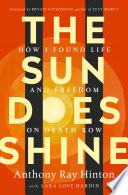
Other works by Anthony Ray Hinton
More books by this author — not yet covered in our podcast catalog.