Authors & Guests / Anthony Damasio

Anthony Damasio
Antonio R. Damasio (born February 25, 1944, in Lisbon , Portugal ) is a neuroscientist renowned for investigating the neural underpinnings of emotion , feeling, decision-making , and consciousness . He holds the position of University Professor and David Dornsife Professor of Neuroscience at the University of Southern California (USC), where he also serves as director of the Brain and Creativity Institute, collaborating closely with his wife, Hanna Damasio, on empirical studies integrating neurology , psychology , and neuroimaging . Damasio earned his medical degree from the University of Lisbon in 1974, completing neurological training there before advancing to prominent roles in the United States, including at the University of Iowa .
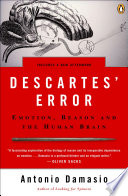
Damasio's most influential contribution is the somatic marker hypothesis, which asserts that bodily-based emotional signals, or "somatic markers," generated in brain regions like the ventromedial prefrontal cortex, bias cognitive processes toward advantageous choices by associating past outcomes with visceral feedback, thereby facilitating adaptive behavior under uncertainty. This framework, initially derived from observations of patients with focal brain damage who displayed intact intelligence but profoundly impaired real-life decision-making—such as Phineas Gage-like cases—challenges Cartesian dualism by demonstrating that emotion is not antithetical to reason but essential for its effective operation. In his 1994 book Descartes' Error: Emotion, Reason, and the Human Brain , Damasio synthesized clinical evidence to argue that disruptions in emotional processing lead to maladaptive choices, even when logical faculties remain unimpaired.
His broader body of work extends to theories of consciousness , often encapsulated by the phrase "I feel, therefore I am" in contrast to Descartes' "I think, therefore I am," positing that consciousness emerges from the brain's mapping of the body's internal states in relation to the external environment, as elaborated in subsequent books like The Feeling of What Happens (1999), Self Comes to Mind (2010), and Feeling & Knowing (2021). Damasio has received accolades including the 2010 Honda Prize for his integration of emotion into decision-making models and the 2005 Prince of Asturias Award for Scientific and Technical Research, reflecting the empirical impact of his research on understanding human cognition as inherently embodied and affective.
Antonio Damásio was born on 25 February 1944 in Lisbon , Portugal . He spent his early years in the country during the authoritarian regime of António de Oliveira Salazar, which governed Portugal from 1932 until 1968 and emphasized conservative values amid economic stagnation and political repression .
From his earliest years, Damásio exhibited a keen fascination with the mechanisms of the human mind and the possibility of studying it scientifically, an interest that foreshadowed his later career in neuroscience . This curiosity developed within the context of Portuguese culture, where expressions of emotion , such as in the traditional music genre of fado —characterized by themes of melancholy and fate—provided a socially sanctioned outlet for feeling, potentially shaping his eventual theories on the interplay between emotion and reason.
Portugal's mid-20th-century educational system, influenced by the Salazar regime's focus on classical learning and national identity , likely contributed to Damásio's formative intellectual environment, though specific details of his pre-university schooling remain undocumented in primary sources. His exposure to literature , including American authors during his youth, broadened his perspectives beyond local constraints.